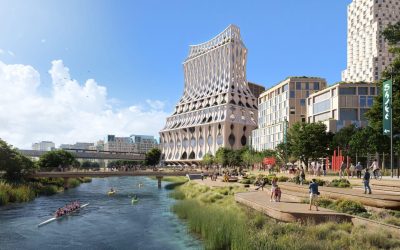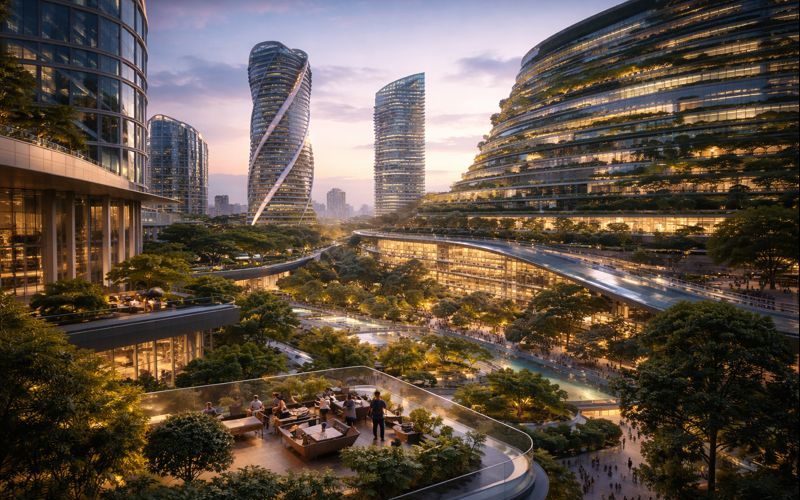
Global design firm Gensler’s latest design forecast for 2026 highlights a fundamental change in how buildings are being conceived, developed, and experienced. Drawing on its global research and project work, the firm identifies a set of converging forces that are moving design away from static, single-purpose assets toward environments built for adaptability, wellbeing, and long-term relevance, as outlined in its Design Forecast 2026.
According to Gensler, experience has overtaken efficiency as a primary design driver. Residential, workplace, and mixed-use projects are increasingly shaped around how people feel, interact, and move through space, rather than around rigid functional programs. This shift is particularly visible in high-value developments, where differentiation is no longer achieved through scale alone.
The forecast also points to flexibility becoming a structural requirement rather than a design preference. Gensler notes that economic uncertainty, changing work patterns, and evolving lifestyles are pushing developers to create spaces that can be reconfigured over time without compromising identity or long-term value.
Technology plays a more central role in this transition. Gensler’s research suggests that artificial intelligence is moving beyond operational optimisation and into early-stage design thinking, enabling more predictive, responsive, and personalised environments. This evolution has implications across luxury residential projects, commercial assets, and large-scale urban developments seeking long-term resilience.
Another key finding is the growing emphasis on reuse and reinvention. Rather than prioritising new construction alone, Gensler observes increased momentum behind adaptive reuse, infrastructure-led placemaking, and hybrid developments that combine residential, cultural, and commercial functions.
Underlying all six trends is a consistent focus on resilience and sustainability as value drivers. Gensler’s outlook indicates that climate responsiveness, material longevity, and operational efficiency are increasingly linked to asset performance and investor confidence, rather than treated as regulatory obligations.
Gensler’s 2026 design outlook presents a future where successful projects are defined less by permanence and more by their ability to evolve. The key message is that design that anticipates change will shape the next generation of globally competitive assets.