Project Overview
| Project Type | Cultural museum |
| Architect | Architectural Design and Research Institute of South China University of Technology Co. Ltd. |
| Owner | Shenzhen Qianhai Construction Investment Holdings Group Co., Ltd. |
| Location | Qianhai Bay, Shenzhen, China |
| Site Area | 32,400m² (348,750 ft²) |
| Total Floor Area | 126,000m² (1.35 million ft²) |
| Floors | 7 above ground, 3 basement levels |
| Exhibition Space | 40,000m² (430,560ft²) across 26 galleries |
| Construction Approach | Prefabricated construction; smart construction robots; sustainable design strategies |
| Opening | Trial operations: October 2026 |
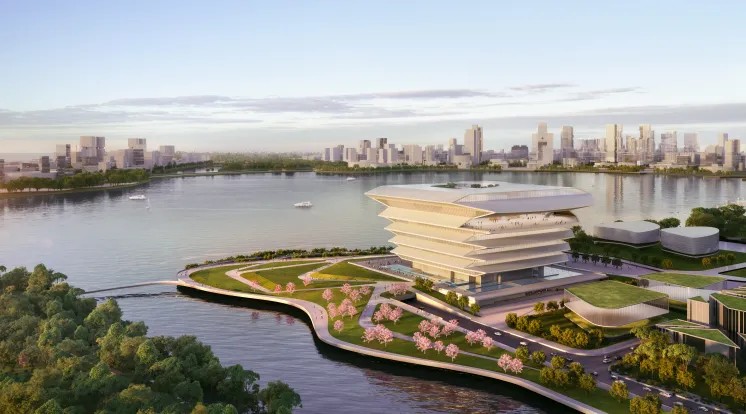
Rising gracefully along Shenzhen’s Qianhai Bay, Qianhai Museum stands as a new cultural beacon for the Guangdong-Hong Kong-Macao Greater Bay Area. Conceived as a “Tree of Civilization and Beacon of the Era,” the museum reimagines traditional Chinese architectural motifs through contemporary parametric design, seamlessly integrating exhibition spaces, public plazas, and landscaped terraces.
With over 126,000m² (1.35 million ft²) of total floor area, panoramic galleries, and a rooftop garden, the museum embodies a dialogue between architecture, culture, and nature, establishing itself as a smart, sustainable, and internationally significant landmark for Shenzhen.
Trial operations are scheduled for October 2026.
Qianhai Museum location
Perched along Shenzhen’s Qianhai Bay, the museum site is framed by the Dananshan and Xiaonanshan mountains, offering a dramatic backdrop for its coastal presence. Its position on the waterfront integrates seamlessly with urban circulation networks, including subterranean transit connections that link the museum to the city. The surrounding coastal greenbelt gently merges into the museum’s base, creating a fluid transition between landscape and architecture and encouraging public engagement. Within the Guangdong-Hong Kong-Macao Greater Bay Area, Qianhai Museum stands as a cultural anchor, emphasizing both community access and landmark visibility.
Architectural design of Qianhai Museum
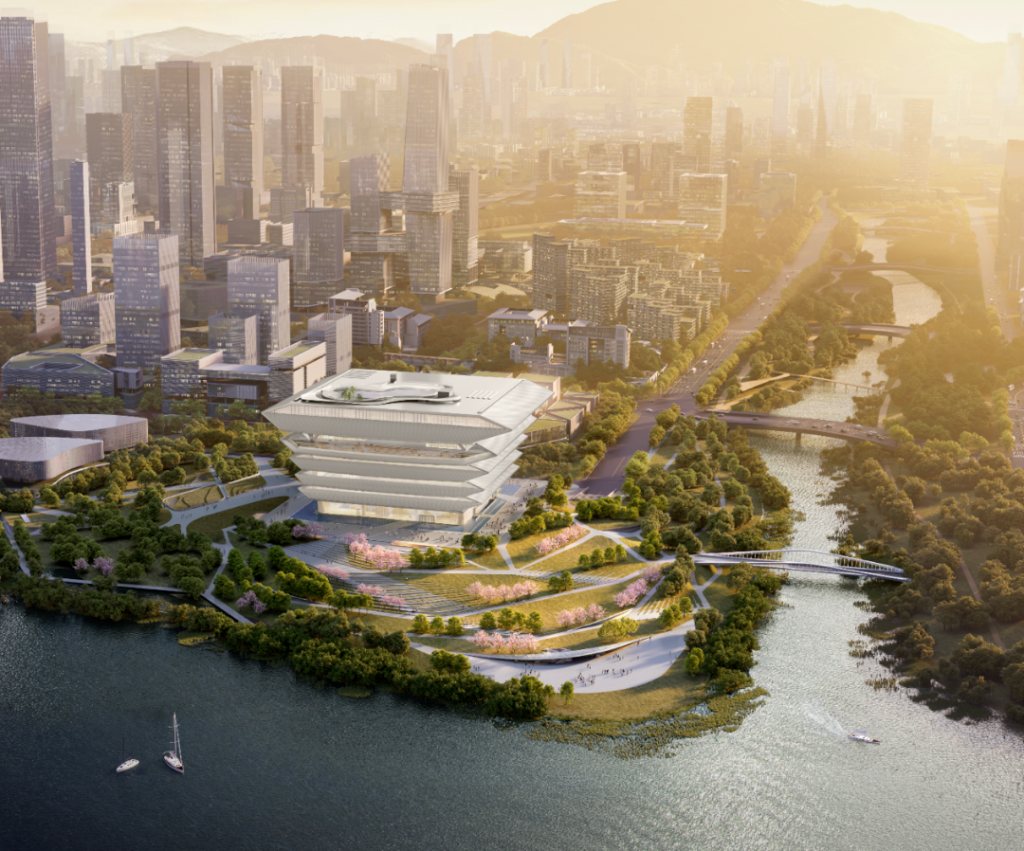
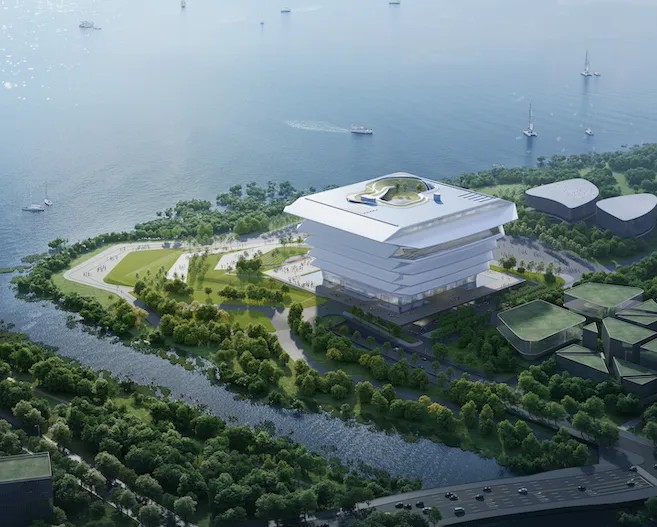
The design, conceived as a “Tree of Civilization and Beacon of the Era,” draws inspiration from the mountains, the sea, and the urban fabric of Shenzhen. The museum rises elegantly above the terrain, forming a column-free ground-level hall that invites vibrant public interaction. Eight central core tubes establish an inner-outer ring structure, providing expansive, unobstructed exhibition spaces capable of hosting large-scale cultural relics and international art shows.
A dramatic 100-meter arched structure on the fifth floor frames sweeping views of Qianhai Bay, while a rooftop garden links floors five through seven, unifying the vertical composition and offering a contemplative space that connects visitors with the surrounding nature.
The façade reinterprets the traditional Chinese multi-eaved roof through parametric aluminum panels, filtering daylight and air, creating a shimmering, luminous seascape that responds to natural light throughout the day. Integrated within the roof, a BIPV curtain wall generates renewable energy, seamlessly combining architectural expression with environmental responsibility.
Smart construction and sustainable architecture
The construction of Qianhai Museum embraced prefabricated methodologies and state-of-the-art smart construction technologies to enhance both efficiency and quality. Rail-mounted and collaborative welding robots enabled precision with a first-pass acceptance rate exceeding 99%, while portable laser rust-removal and wall-polishing robots increased efficiency more than twofold. Concrete leveling robots maintained flatness within ±5 mm, reduced labor requirements, and achieved a qualification rate above 95%.
These innovations highlight a philosophy in which technology empowers rather than replaces human workers, allowing them to execute complex tasks with greater strength, precision, and safety. The museum’s design also aligns with China’s Three-Star Green Building standard, demonstrating a commitment to environmental sustainability.
Exhibition spaces and public experience at Qianhai Museum
Spanning over 40,000m² (430,560ft²) across 26 galleries, Qianhai Museum accommodates permanent, thematic, and temporary exhibitions. The flexible, column-free spaces, with floor heights reaching 14.4m, support a wide range of cultural programming. Collaboration with the National Museum of China ensures that the museum will feature flagship exhibitions such as A General History of Ancient China, Ancient Chinese Jade, and Ancient Chinese Porcelain.
Multi-level circulation, open plazas, and landscaped terraces foster community interaction, encouraging visitors to experience the museum not only as a repository of culture but as a public gathering space that blends nature, architecture, and heritage.
Landscape design and public spaces surrounding Qianhai Museum
The museum’s landscape design emphasizes a harmonious integration of urban and natural elements. Coastal green belts merge with the softly landscaped museum base, guiding circulation while creating welcoming public spaces. Rooftop gardens and terraces extend the visitor experience vertically, offering contemplative views and reinforcing the museum’s connection to Qianhai Bay. These landscaped spaces function as both social areas and visual extensions of the architectural composition, enhancing the overall spatial narrative of the site.
Interior design and visitor experience
Interiors were conceived to complement the architectural vision while ensuring visitor comfort and exhibition flexibility. Open, column-free layouts, thoughtfully planned lighting, and a material palette inspired by local cultural heritage create an immersive environment for both viewing and learning. The interplay between interior architecture, exhibition design, and landscape allows visitors to experience a seamless narrative of culture, art, and space.
Key players involved in the Qianhai Museum project
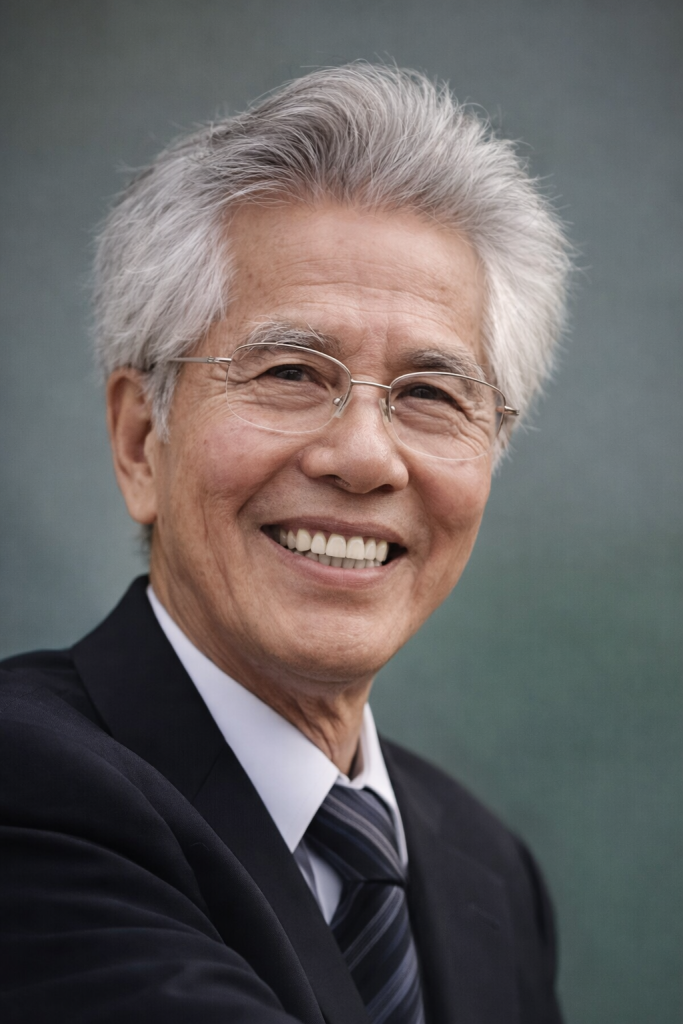
The construction contractor, China Construction Science and Industry Corporation Ltd, executed the complex structure with precision and innovative methodologies. Architectural leadership was provided by the Architectural Design and Research Institute of SCUT, under the direction of Professor He Jingtang, a renowned architect and Academician of the Chinese Academy of Engineering. Interior design was developed in collaboration with SCUT, CityGroup Design Co. Ltd., and CCD (Cheng Chung Design), ensuring cohesive spatial quality and immersive exhibition environments.
The façade engineering was undertaken by VS-A Group, while Brandston Partnership Inc. led the lighting design. Landscape architecture was collaboratively executed by SCUT and AECOM, integrating public spaces and natural elements seamlessly. Arup International Consultants (Shanghai) Co. Ltd., Shenzhen Branch provided circulation consulting, and SMART SAFETY Security Technology Consulting Ltd. managed fire safety solutions.