David Pugh, recently appointed principal at HOK and leader of the firm’s Science + Technology group, outlined the challenges and innovations involved in designing high-tech facilities in a recent Q&A. Pugh, based in San Francisco, oversees projects spanning robotics, quantum sciences, life sciences, automotive R&D, and semiconductor laboratories.
In the discussion, Pugh highlighted the complexity and adaptability required in modern technology spaces. “Future-proofing a building is impossible,” he said. “But we try to help clients plan for second lives.” He emphasised that many projects integrate specialised components—such as clean rooms, secure laboratories, or quantum measurement facilities—within larger ecosystems to serve diverse client needs.
Flexible design for advanced technology laboratories
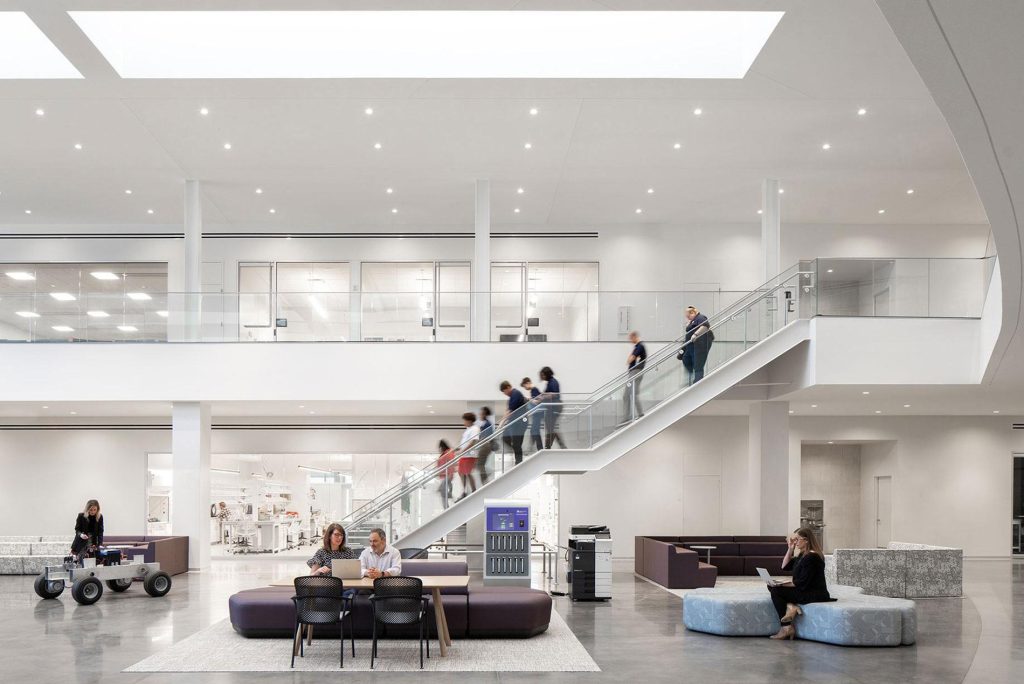
Clients increasingly demand adaptable spaces, Pugh explained. “Funding sources change, politics change, and technology evolves so fast,” he said. Buildings designed for a single tenant or purpose can quickly become a liability if requirements shift.
“Anyone who says they have future-proofed a building is lying,” he added. “We help clients think holistically about what a building could be if things change, or how to convert it thoughtfully rather than starting from scratch.”
Integrated architecture for high-tech facilities
HOK’s integrated model, which combines architecture, engineering, interiors, planning, and consulting, enables coordination from the project’s inception. “There is no ‘easy button’ in the advanced technology sector,” Pugh said. “Having a deep bench of experts in-house makes the process much smoother for the client.”
This collaboration is crucial for advanced facilities, where energy requirements, low-latency computing, and workflow integration intersect with sustainability and human-centred design.
Human-centred design in scientific workplaces
Pugh stressed the importance of considering the people who use these spaces. “Ignoring the human side of the scientific workplace is putting your head in the sand,” he said. HOK integrates research on workplace psychology and neuroinclusion to create environments that support diverse working styles while fostering collaboration and focus.
With competition for skilled talent intensifying, designing workspaces that accommodate employees’ needs can also improve retention.
Designing customer experience centres for technology companies
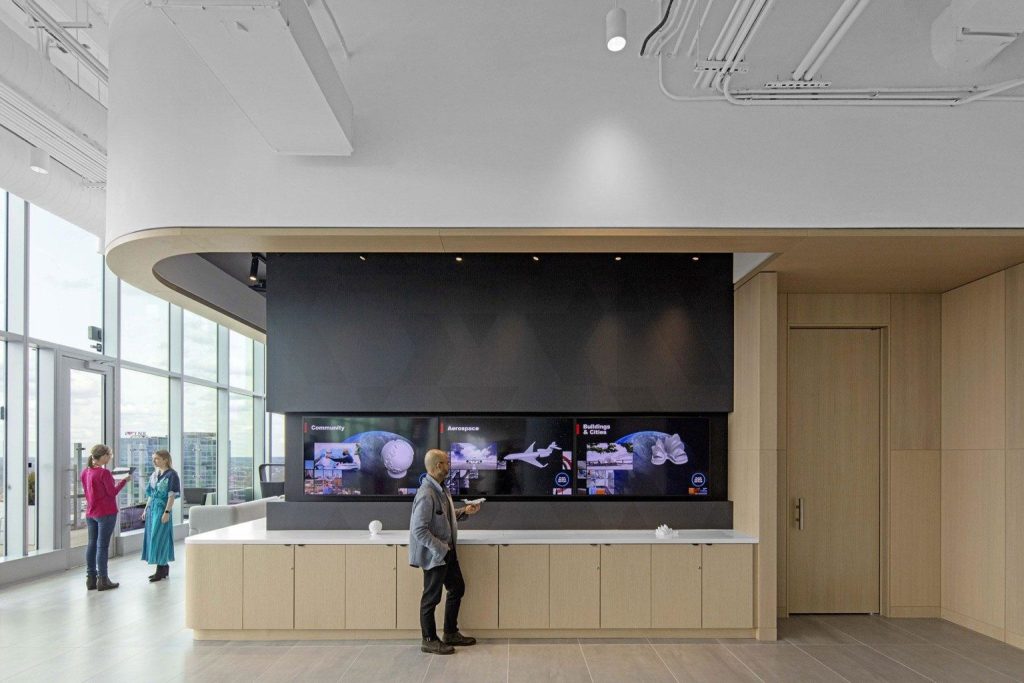
Another area of focus is Customer Experience Centres, which allow companies to showcase technologies for investors, clients, and partners. These spaces often incorporate AR/VR, live demonstrations, and immersive exhibits. Pugh described a project in Ottawa with multiple pavilions, each highlighting different technologies. “It’s about differentiation,” he said. “If you’re competing for the next round of funding or contract, how you present your technology matters.”
How technology sectors are converging in facility design
Traditional sector boundaries are increasingly blurring, Pugh noted. Life sciences clients now often require server farms, robotics, and automated 24/7 laboratories. These integrated spaces introduce new challenges in energy demand, infrastructure, and workflow planning, requiring collaboration across disciplines.
Key takeaways from the conversation
The conversation illustrates the growing complexity of advanced technology facilities. According to Pugh, designing these spaces requires flexibility, integrated planning, and attention to both technical and human factors. By coordinating architecture, engineering, and workplace design from the outset, firms can deliver buildings that accommodate evolving technologies while supporting the people who use them.
HOK is a global design, architecture, engineering and planning firm.The full conversation with David Pugh, HOK’s original Q&A can be read here.