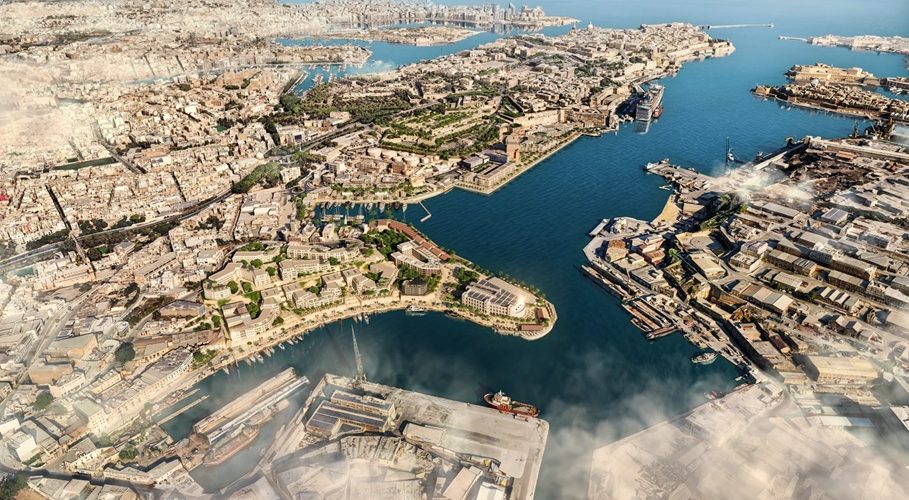
Chapman Taylor has unveiled a comprehensive architectural masterplan for the regeneration of Grand Harbour in Valletta, presenting a carefully balanced vision that honours Malta’s historic waterfront while redefining its future civic and urban role.
Rather than imposing a new identity on the harbour, the proposal works through recalibration, restoring connections between city and sea while embedding contemporary uses within the site’s layered heritage context.
Architecture as urban stitching
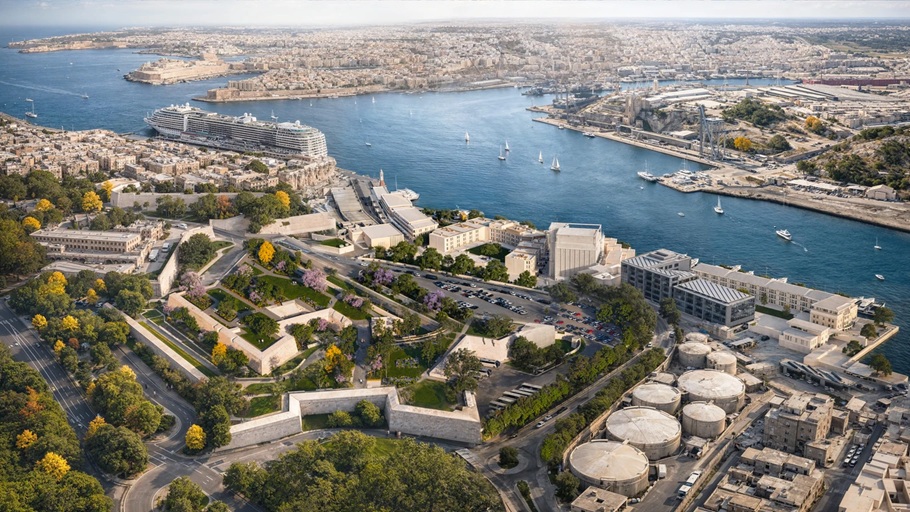
The masterplan is guided by three core principles: heritage, revival and opportunity. Architecturally, this translates into a framework that strengthens spatial continuity across the waterfront rather than introducing isolated developments.
A sequence of new public realms is proposed to open the harbour to people once again. Central to this is a people-focused marina, integrated with mixed-use components including residential, hospitality, retail and curated market spaces. These elements are conceived as part of a cohesive waterfront fabric, carefully scaled and positioned to maintain Valletta’s distinctive character.
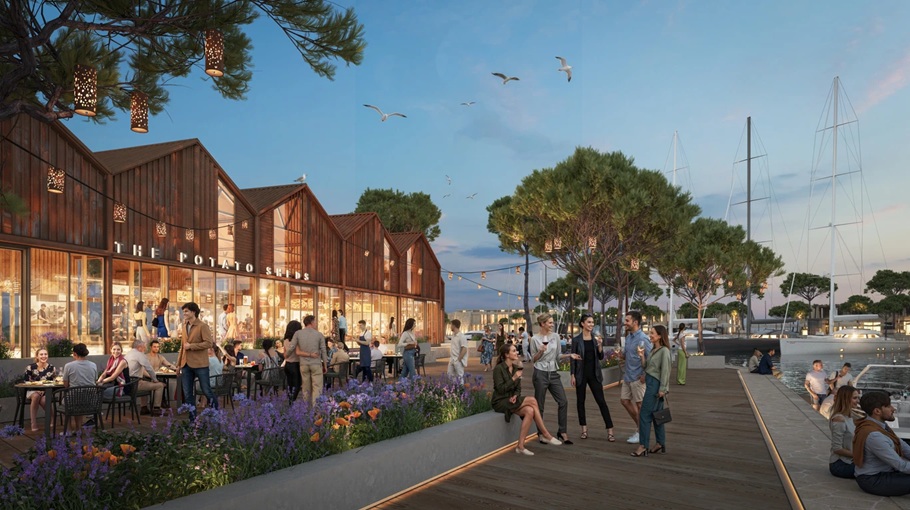
Enhanced pedestrian routes and improved ferry connections further reinforce the harbour as a connected urban landscape rather than a fragmented edge condition.
Phased transformation
The regeneration will be delivered incrementally, beginning with the former power station site, identified as a catalyst intervention. This phased strategy allows architectural change to occur with sensitivity, ensuring coordination with existing maritime operations and stakeholders.
Such an approach reflects an understanding that waterfront regeneration in historically dense contexts must evolve through precision rather than speed.
Designing for durability
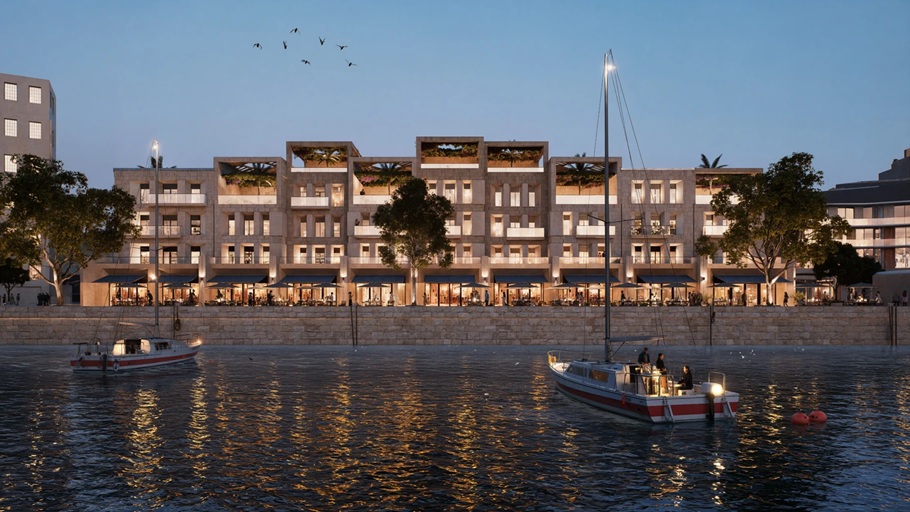
Sustainability within the scheme is framed through resilience and long-term value. Valletta itself stands as one of Europe’s most enduring urban environments, having adapted across centuries without losing its identity.
The masterplan seeks to extend that legacy — embedding contemporary architecture within the harbour’s historic structure while strengthening its environmental and economic performance.
Repositioning a national asset
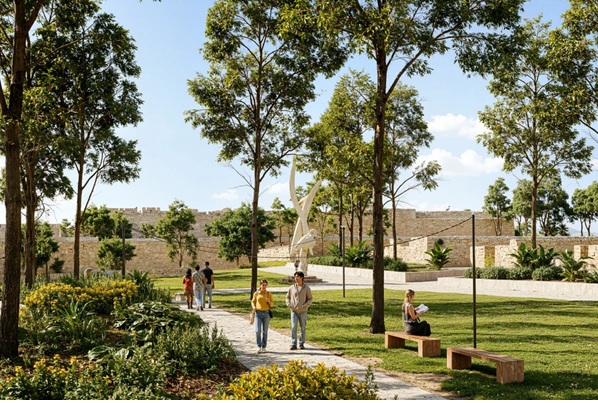
Grand Harbour is not merely a waterfront development opportunity; it is a cultural and symbolic anchor for Malta. Chapman Taylor’s vision positions architecture as the mediator between preservation and progression — unlocking public access, enabling economic activity, and restoring the harbour as a year-round civic destination.
The project could redefine how historic Mediterranean waterfronts evolve — not through replacement, but through respectful architectural reintegration.