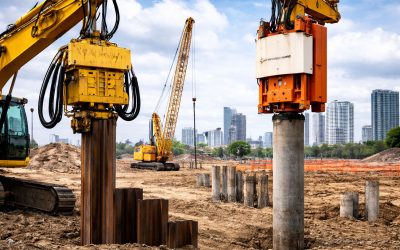

The construction industry is increasingly adopting artificial intelligence (AI) as a strategic technology to enhance planning, risk management, execution and productivity across projects. Recent industry surveys and expert reports show that AI is moving from early experimentation into deeper operational use, with professionals recognising its growing value for complex, high‑value construction programmes.
AI adoption surges in construction: Opportunities and challenges
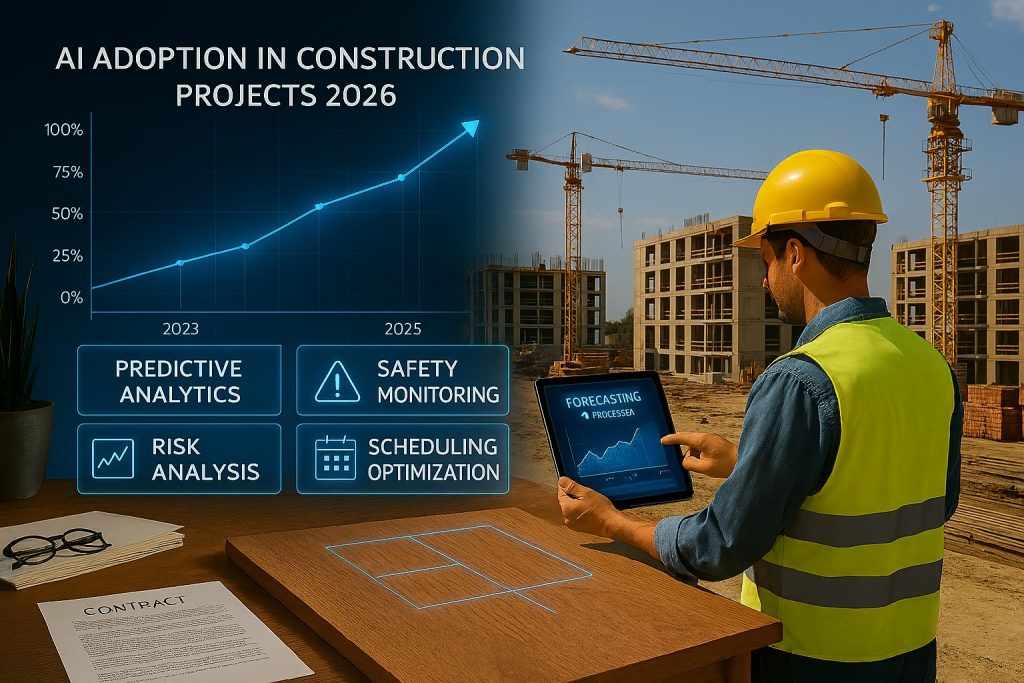
AI adoption is rising rapidly in construction project workflows. Research from the Association for Project Management (APM) shows that, in 2025, 75% of construction projects reported use of AI tools, compared with just 15% two years earlier — indicating a significant shift in professional practice.
The same survey found that a large majority of professionals now use AI more frequently than they expected five years ago, reflecting broad enthusiasm for tools that can support planning, reporting and analysis.
However, industry sentiment reports show that adoption is still uneven. Nearly half of organisations report little or no AI use, while many others are still exploring strategic planning or pilot projects rather than full operational integration, according to RICS.
Predictive analytics and AI tools are helping teams identify risk early
AI’s practical value in construction increasingly centres on predictive analytics, where machine learning models analyse project data to flag potential cost overruns, schedule delays and quality issues before they escalate.
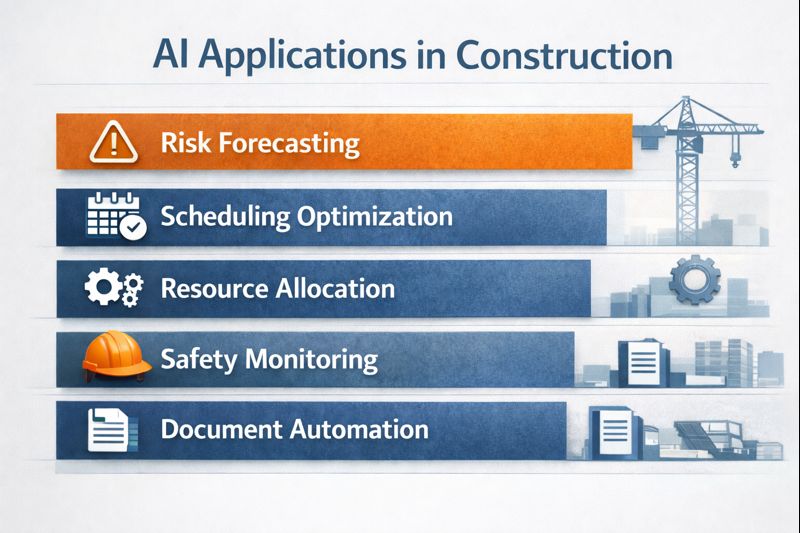
Survey data from APM indicates that AI benefits are being seen most clearly in areas such as risk analysis and forecasting, resource allocation, reporting and dashboarding, and task automation — all essential elements of proactive project management.
Industry platforms are now embedding predictive capabilities that unify historical project data with real‑time inputs, enabling planners and executives to assess “what‑if” scenarios and respond early to emerging issues.
On‑site AI applications: Safety, scheduling, and documentation
On construction sites, AI is being applied to enhance safety, streamline workflows and automate routine tasks.
Major industry trend reports illustrate how AI‑enabled computer vision and sensor analytics can monitor site conditions, detect safety anomalies and support quality assurance with less manual intervention than traditional inspection cycles.
Additionally, AI‑assisted tools are increasingly being used to process and summarise documentation, such as daily reports, contracts or integrated Building Information Modelling (BIM) data, reducing administrative burden while improving accuracy and transparency.
Such tools also support predictive scheduling and resource forecasting by identifying patterns in historical performance and site conditions, helping teams adjust plans before delays occur.
Luxury and complex projects see measurable benefits from AI integration
For developers, architects, and planners working on high‑end and architecturally complex builds, AI provides tangible operational advantages.
By automating routine analysis and supporting deeper insights from large data sets, AI helps reduce rework, improve forecasting and boost overall project delivery certainty. In luxury residential or commercial projects with tight margins and exacting design requirements, these capabilities help teams stay on schedule, maintain design intent and streamline coordination among stakeholders.
Market growth signals AI as a strategic construction technology
Industry market projections point to robust long‑term growth in AI use across construction.
According to Persistence Market Research, AI technologies in construction — particularly machine learning, automation, and project management analytics — are expected to expand significantly through 2033, with strong adoption in project controls, scheduling, safety analytics and on‑site execution categories as AI becomes embedded in core platforms.
This trend underscores how construction firms are increasingly treating AI not as an experimental add‑on but as a core capability that supports competitive delivery and risk‑aware decision‑making.
Preparing teams and workflows for successful AI implementation
Despite the momentum, meaningful adoption at scale still requires strategic planning, workforce training and organisational readiness.
Industry research highlights that a lack of technical skills, integration challenges and data quality issues remain the top barriers to broader AI use, suggesting that firms with clear training, governance and data strategies will lead future deployments.
For construction executives and technology decision‑makers, balancing responsible adoption with investment in people and processes is key to unlocking the full potential of AI as an everyday operational tool.
Key takeaways
- AI adoption in construction projects has risen sharply, with most project professionals now integrating AI into workflows.
- Predictive analytics, resource planning and risk forecasting are among the highest‑impact use cases.
- On‑site safety monitoring, documentation automation and scheduling optimisation are advancing rapidly as practical applications.
- Sustainable adoption requires investment in skills, data governance and integration frameworks.