
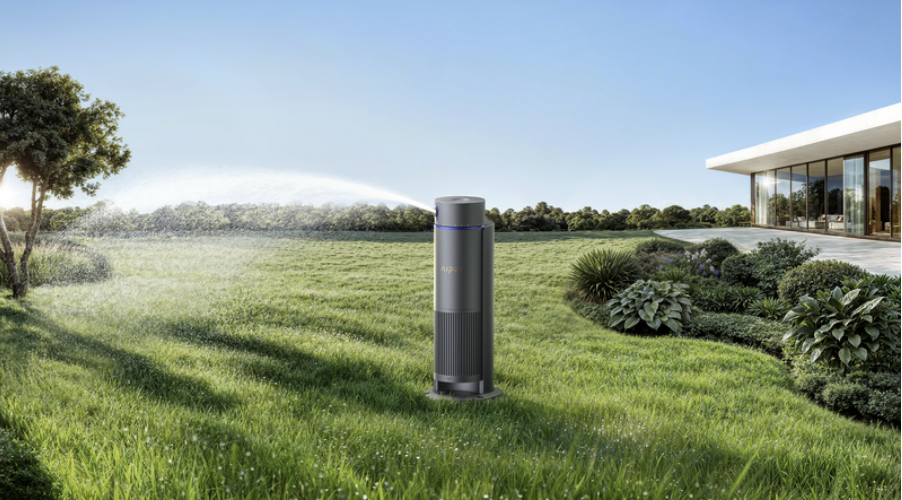
Irrigation has long been treated as a background utility in residential projects — necessary but rarely reconsidered. Installation typically involves trenching, buried pipework and fixed timers operating on static schedules. With rising water costs and tighter usage controls, that model is facing scrutiny.
With the launch of IrriSense 2, outdoor technology company Aiper presents an alternative: a modular, app-controlled irrigation system that requires no trenching and adjusts watering in real time. The company states the system can reduce water consumption by up to 40% compared with conventional installations.
For residential developers, the system addresses two practical considerations: water efficiency and installation logistics.
Why conventional residential irrigation systems waste water
Traditional systems are infrastructure-heavy. Installation requires excavation, underground piping, electrical connections and external controllers. Retrofitting can be disruptive and expensive, particularly in established properties.
Operationally, most systems run on fixed schedules. Unless manually adjusted, they continue watering during rainfall. Zone control is often basic, which can lead to uneven coverage and runoff.
As sustainability metrics become embedded in residential planning, irrigation systems are increasingly assessed for efficiency, particularly in regions where supply is under pressure.
How Aiper’s IrriSense 2 smart irrigation system eliminates trenching
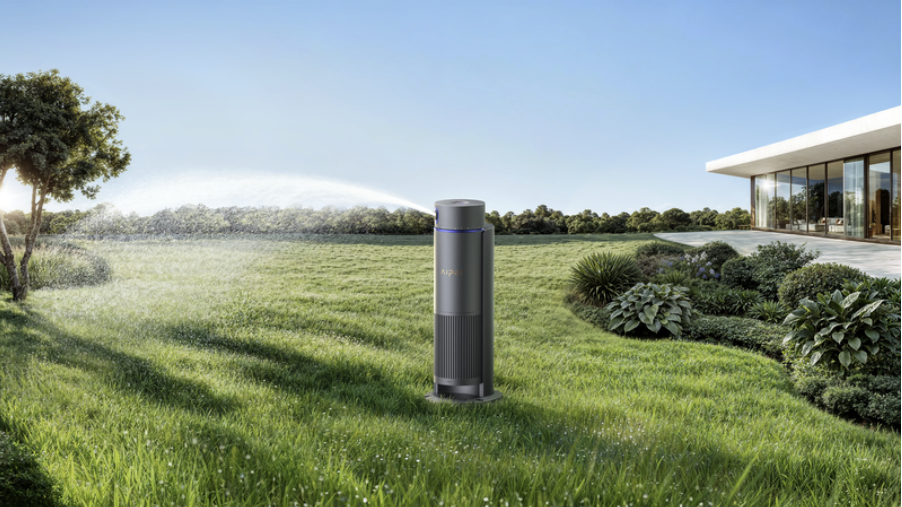
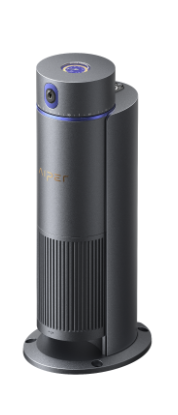
IrriSense 2 combines several components into a single above-ground unit. The system integrates a smart timer, rotary sprinklers, a solenoid valve, and a nutrient dispenser into one device. According to Aiper, it is the first 4-in-1 multi-zone system in this format.
Installation does not require trenching or wiring. The unit connects to a water source and is configured via a mobile application that maps watering zones digitally. Aiper states that installation can be completed in under 15 minutes.
Removing excavation simplifies landscaping schedules. In retrofit settings, it avoids disturbing existing paving or turf.
Weather-based irrigation and real-time water optimisation
The system supports up to ten independent watering zones, programmed according to vegetation type, soil condition and sun exposure. This segmentation aims to reduce overwatering in low-demand areas while maintaining coverage elsewhere.
Weather-Sense™ technology adjusts schedules based on forecast data. If rainfall is predicted, watering is deferred. During higher temperatures, output increases where required. An integrated rain sensor pauses irrigation when precipitation is detected.
The distribution mechanism, branded EvenRain™, is designed to replicate natural rainfall across areas of up to 445m2 (4,790ft2). Uniform coverage is intended to limit runoff and dry patches.
Performance will depend on site conditions, but the system’s principle is straightforward: align water delivery with environmental data rather than fixed programming.
Smart irrigation in residential developments and retrofit projects
Smart home technology has largely focused on interior systems such as lighting, heating and security. Exterior infrastructure has developed more slowly.
Aiper, known for cordless robotic pool cleaners, is extending its portfolio into connected outdoor systems. The strategy reflects a broader shift towards managing landscape functions through the same digital interfaces used indoors.
In higher-specification residential developments, integrated control of irrigation and other outdoor systems may become part of standard specifications.
Build quality, noise levels and system pricing
IrriSense 2 includes UV-resistant housing, anti-freeze drainage and stainless copper fittings designed for year-round exposure. The system operates at under 60 decibels.
The product has received a SEAL Award for environmental impact through resource efficiency. It is priced at €499.99 and available via Aiper’s official store and selected retail partners.
Is plug-and-play irrigation the future of residential landscaping?
The significance of systems such as IrriSense 2 lies in installation design rather than feature count. Eliminating trenching and embedding data-based controls shifts irrigation from fixed plumbing infrastructure to modular equipment.
For developers seeking lower water consumption without additional construction complexity, the approach is commercially relevant. Whether plug-and-play irrigation becomes standard will depend on performance and adoption. What is evident is that outdoor systems are moving towards connected, adaptive control.
Residential irrigation is increasingly treated as managed infrastructure rather than passive plumbing.