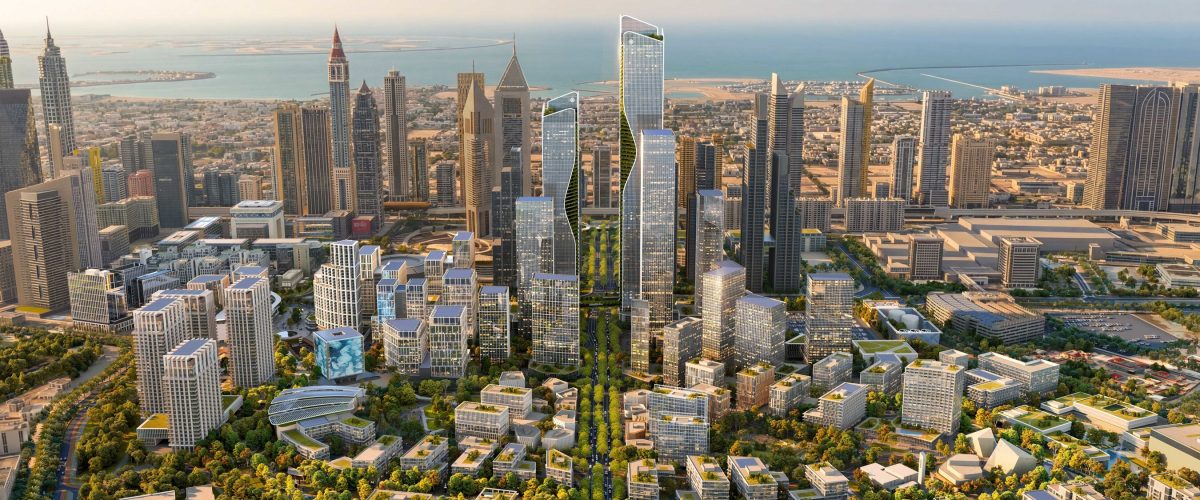
Dubai’s announcement of DIFC Zabeel District is, on its face, a real-estate and infrastructure story. Viewed through a policy lens, however, the expansion offers a window into how the emirate is operationalising the ambitions of the Dubai Economic Agenda D33 through institutional scale rather than regulatory reform alone.
While DIFC has long been positioned as the region’s only financial centre operating at scale across banking, capital markets, asset management and fintech, the Zabeel District expansion marks a shift in emphasis — from incremental densification to wholesale spatial growth.
From centre to district
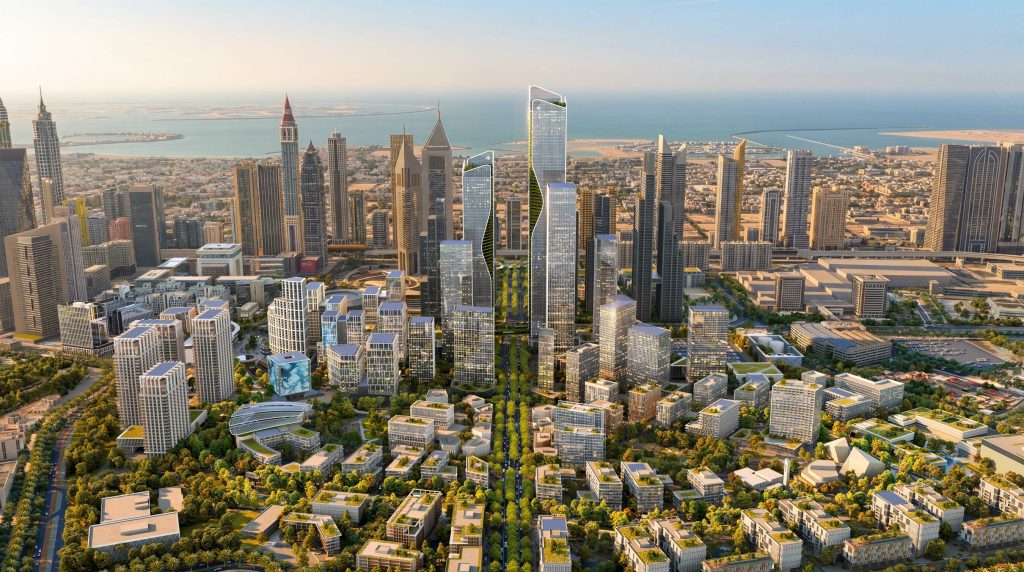
The scale of the expansion (17.7 million ft2 of gross floor area) suggests a deliberate move to transform DIFC from a concentrated financial enclave into a multi-functional district that blends finance, technology, education and culture.
This approach aligns with D33’s broader emphasis on ecosystem building, where growth is driven not only by headline sector performance but by the co-location of talent, capital, innovation and lifestyle infrastructure. DIFC Zabeel District appears designed to internalise that model within a single planning framework.
Innovation and AI as institutional infrastructure
More than one million square feet has been allocated to an innovation hub and a purpose-built AI campus, signalling that artificial intelligence is being treated not as a peripheral capability but as foundational infrastructure within the expanded financial district.
Rather than positioning AI purely as a regulatory sandbox or fintech vertical, DIFC is embedding it physically into the district’s expansion. This may indicate a policy preference for long-term capacity building over short-term experimentation, particularly as financial institutions globally grapple with the operationalisation of AI at scale.
Education as an economic lever
The planned ten-fold expansion of the DIFC Academy to 370,000ft2 introduces another policy signal. By integrating further and higher education capacity directly into the financial district, DIFC is effectively tying talent development to place-based economic growth.
For D33, which emphasises human capital as a growth driver, this model reduces reliance on external education pipelines and supports continuous reskilling within the financial ecosystem itself.
Culture and liveability as competitiveness factors
The inclusion of a dedicated art pavilion may appear peripheral in a financial centre expansion, but it reflects a broader recalibration of how competitiveness is defined. Global financial hubs increasingly compete on liveability, cultural depth and quality of urban experience — not just regulatory efficiency.
By embedding cultural infrastructure into the masterplan, DIFC Zabeel District signals that lifestyle considerations are being treated as economic assets rather than amenities.
A long-horizon commitment
With phased delivery extending to 2040, the project’s timeline underscores a long-term institutional commitment rather than a cyclical market response. This horizon suggests confidence in sustained demand for Dubai-based financial services across MEASA, while also exposing the project to macroeconomic, technological and regulatory shifts over time.
What DIFC Zabeel District signals
Rather than a standalone real-estate expansion, DIFC Zabeel District can be read as a physical manifestation of Dubai’s D33 policy logic: scale institutions first, integrate ecosystems second, and allow markets to compound around them.
Whether this model delivers its intended outcomes will depend less on square footage and more on execution — particularly how effectively finance, technology, education and culture are integrated in practice. What is clear is that Dubai is choosing to express economic policy not just through strategy documents, but through city-scale financial infrastructure.