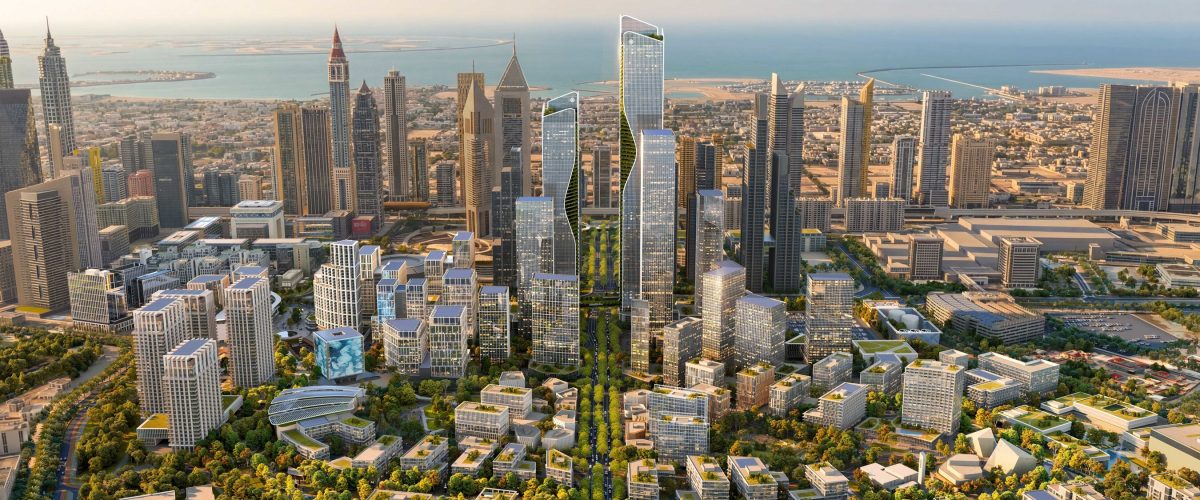
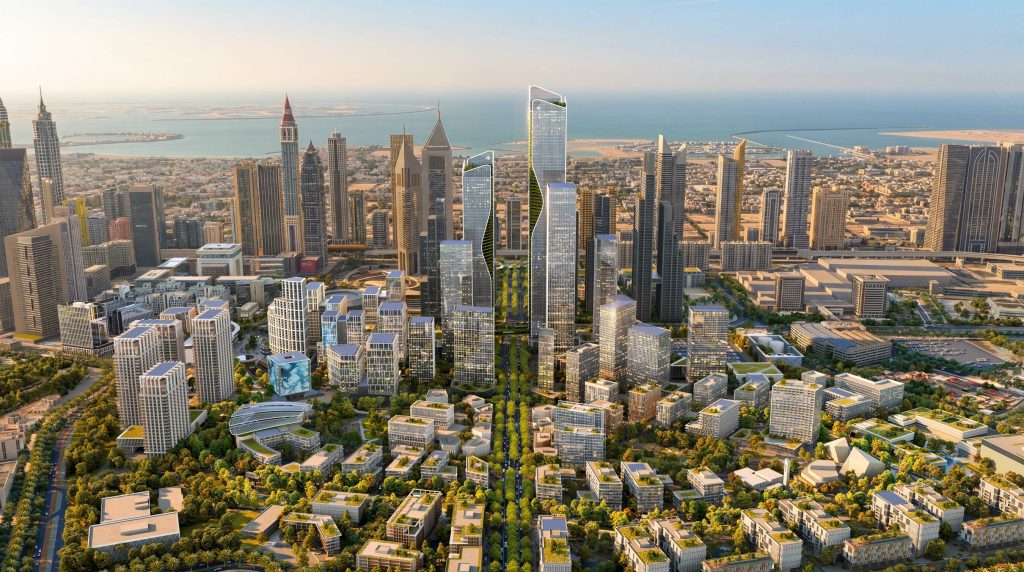
Dubai has announced the largest demand-led expansion of a financial centre in the Middle East, Africa and South Asia (MEASA), with the launch of DIFC Zabeel District, a major extension of Dubai International Financial Centre (DIFC).
The announcement was made yesterday by His Highness Sheikh Mohammed bin Rashid Al Maktoum, Vice President and Prime Minister of the UAE and Ruler of Dubai, positioning the expansion as a further step in consolidating DIFC’s role as a global financial hub for the MEASA region.
DIFC Zabeel District will span a site area of 7.1 million square feet, with a total gross floor area of 17.7 million square feet. The estimated gross development value exceeds AED100 billion ($27.2 billion), making it the most significant expansion of a financial centre ever announced in the region.
According to DIFC, the development will significantly scale the centre’s capacity, enabling it to accommodate more than 42,000 companies and a workforce exceeding 125,000.
His Excellency Essa Kazim, Governor of DIFC, said the expansion would “redefine the financial industry in the MEASA region” and accelerate DIFC’s contribution to Dubai’s economic growth, describing DIFC Zabeel District as a platform for future financial services and innovation.
The expansion includes more than one million square feet dedicated to what DIFC describes as the world’s largest innovation hub and the world’s first purpose-built AI campus, intended to support over 6,000 businesses and 30,000 technology specialists.
Education is another stated pillar of the development. DIFC said its Academy will expand ten-fold to 370,000 square feet, with capacity for up to 50,000 learners annually, positioning the district as a hub for further and higher education.
Cultural infrastructure also forms part of the plan, with the inclusion of a new art pavilion aimed at reinforcing DIFC’s role in Dubai’s arts ecosystem.
DIFC Zabeel District will be delivered in six phases. The first public access is expected in 2030, with the full masterplan scheduled for completion by 2040.