As global hospitality markets continue to recalibrate post-pandemic, interior design is increasingly positioned as a strategic driver of guest experience, brand differentiation, and long-term operational resilience. In its 2026 outlook, published by Wimberly Interiors, part of the WATG global design practice, the firm outlines how luxury hospitality interiors are evolving in response to shifting guest expectations, environmental considerations, and economic realities.
Wimberly Interiors’ 2026 interior design trends report focuses specifically on hotels, resorts, and hospitality-led environments, drawing on the practice’s global project experience across luxury and upper-upscale segments.
Authenticity and emotional resonance as core design values
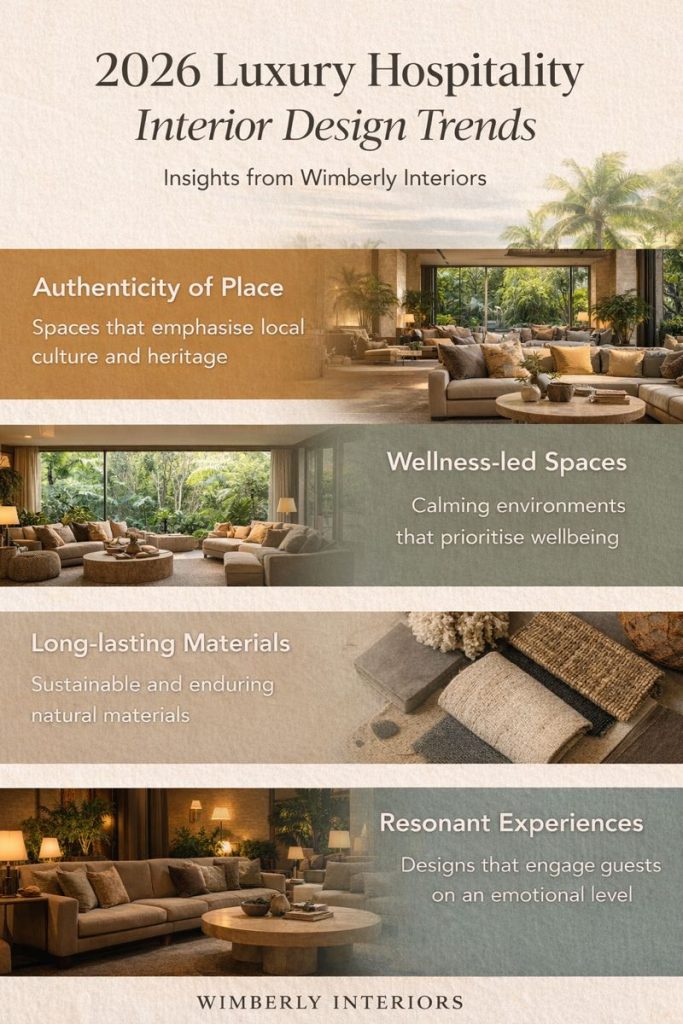
According to Wimberly Interiors, authenticity and emotional resonance are emerging as foundational principles rather than stylistic preferences. The firm notes that hospitality interiors are increasingly designed to foster emotional connection, comfort, and a sense of belonging, rather than relying on visual spectacle or trend-led aesthetics.
Design decisions are being guided by how spaces feel and function over time, with greater attention paid to sensory experience, including light quality, acoustics, tactility, and spatial flow.
“Luxury hospitality interiors in 2026 are shifting towards authenticity, emotional resonance and material longevity”: Wimberly Interiors.
Contextual and place-driven design
The 2026 outlook highlights a growing emphasis on contextual design rooted in local culture, climate, and material traditions. Wimberly Interiors identifies a move away from interchangeable global hotel interiors towards location-specific narratives that reflect regional identity.
This approach is presented as a response to guest demand for more meaningful and differentiated travel experiences, as well as a way for hospitality brands to strengthen authenticity and sense of place.
Wellness embedded into hospitality interiors
Rather than being limited to spa areas or wellness suites, wellbeing is increasingly integrated throughout hospitality interiors. Wimberly Interiors points to the incorporation of biophilic elements, improved air quality, access to natural light, and spatial zoning that supports rest, social interaction, and privacy.
These design strategies are positioned as essential to contemporary hospitality environments, reflecting broader shifts in how guests value comfort, health, and mental wellbeing during travel.
Material honesty and resilience
Material selection is another key focus of the 2026 outlook. Wimberly Interiors reports a growing preference for materials that convey durability, authenticity, and longevity, particularly in high-traffic hospitality environments.
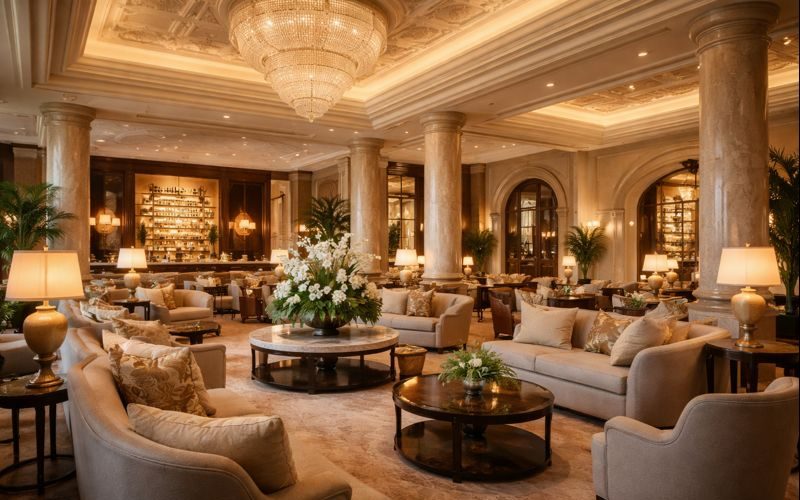
Natural materials such as stone, timber, and textured finishes are favoured for their ability to age gracefully and maintain visual integrity over time. This material philosophy aligns with broader concerns around sustainability, lifecycle costs, and operational resilience.
Designing for longevity and adaptability
The firm also highlights the importance of flexibility and long-term relevance in hospitality interiors. Spaces are increasingly designed to adapt to changing guest needs and operational requirements, reducing the need for frequent refurbishment while maintaining brand relevance.
According to Wimberly Interiors, resilience in design is becoming a commercial as well as environmental priority for hotel owners and operators.
Methodology and sources
Wimberly Interiors’ 2026 interior design trends are based on the firm’s global hospitality project portfolio, ongoing client engagement, and internal research across luxury and upper-upscale hotel segments. The outlook reflects practitioner-led observations rather than third-party trend interpretation.