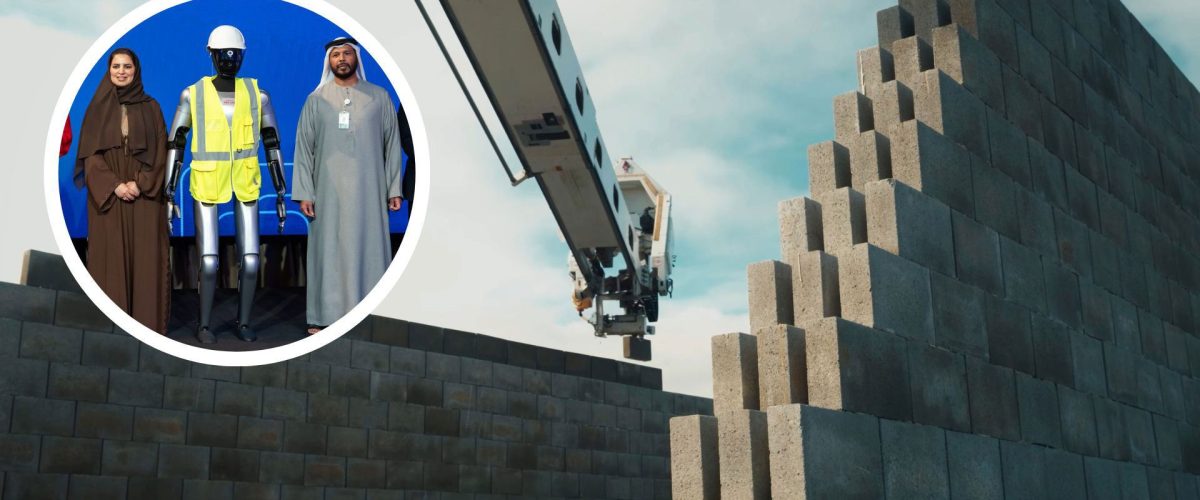
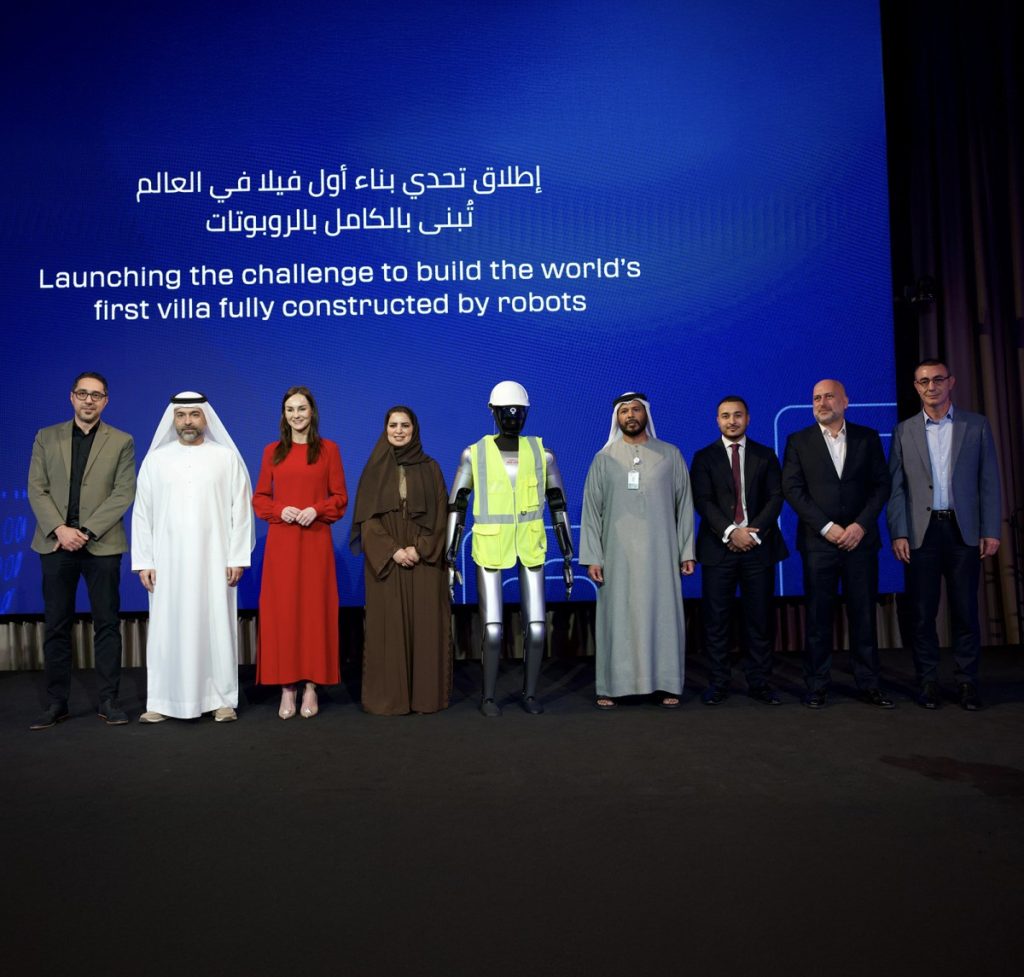
Dubai is taking construction automation to the next level. In a pioneering initiative, Würth Professional Solutions, in partnership with Dubai Municipality and Zacua Ventures, is deploying humanoid robots to construct a full-scale villa at the ConTech Innovation Hub in Expo City Dubai. Dubbed the Robotic Villa initiative, the project serves as a living laboratory to test automation, AI, and robotics in real-world construction environments.
The initiative is part of Würth Professional Solutions’ Red Link strategy, which integrates humanoid robots and robotic dog platforms to perform complex, repetitive, or hazardous tasks on-site. The robots leverage artificial intelligence, computer vision, and predictive analytics to optimise workflow and reduce human risk, while allowing engineers to focus on high-value decision-making.
“Through the Robotic Villa, we are moving robotics beyond the experimental stage into practical, scalable applications in construction,” said Angela Pernsteiner, founder of Würth Professional Solutions. “This project demonstrates how technology can enhance productivity, safety, and precision on live building sites.”
A first-of-its-kind experiment
The villa is not just a showcase of cutting-edge machines; it is a testing ground for new construction methodologies. Robots are tasked with tasks such as automated bricklaying, material handling, and structural assembly, while continuously collecting data to improve performance and adaptability.
H.E. Eng. Marwan Ahmed bin Ghalita, Director General of Dubai Municipality, said:
“The Robotic Villa represents Dubai’s commitment to transforming the construction sector through smart technologies. By combining robotics with human expertise, we are setting new standards for efficiency, sustainability, and quality in urban development.”
The project addresses one of construction’s longest-standing challenges: on-site automation. While off-site manufacturing has been automated for years, live construction sites are highly dynamic, with variable layouts, safety concerns, and human factors. The Robotic Villa initiative demonstrates how AI-enabled robotics can navigate these complexities and deliver consistent results.
The future of automation in building projects
The future implications of the initiative for building projects include:
- Reduced on-site risk by offloading hazardous or repetitive tasks to robots
- Improved speed and precision in building delivery
- Data-driven insights for planning, quality control, and predictive maintenance
By establishing a regional engineering and innovation hub in Dubai, Würth Professional Solutions plans to expand research, talent development, and technology deployment, further integrating robotics into the construction ecosystem.
“This project exemplifies how innovation, government vision, and industrial expertise can converge to create practical, scalable solutions,” said Dr. Anas Bataw, partner at Zacua Ventures.
As the Robotic Villa takes shape, Dubai positions itself at the forefront of technology-driven construction, showing how cities can integrate robotics to meet the demands of a modern, sustainable urban environment.