
Project Overview
| Type | Sports Stadium |
| Location | Victoria Park, Herston, Brisbane; Turrbal and Yagara Country |
| Architects | COX Architecture (Australia), Hassell (Australia), Azusa Sekkei (Japan) |
| Structural Engineers | Arup, schlaich bergermann partner (SBP) |
| Delivery Partner | Unite32, a JV between Laing O’Rourke & AECOM |
| Project Owner | Stadiums Queensland |
| Expected Completion | 2031 |
| Seating Capacity | 63,000 (expandable to 70,000 for concerts) |
| Legacy Tenants | Brisbane Lions (AFL), Queensland Bulls (Cricket), Brisbane Heat (Cricket T20) |
| Estimated Cost | A$3.8bn (stadium); part of A$7.1bn Games Venues Infrastructure Program |
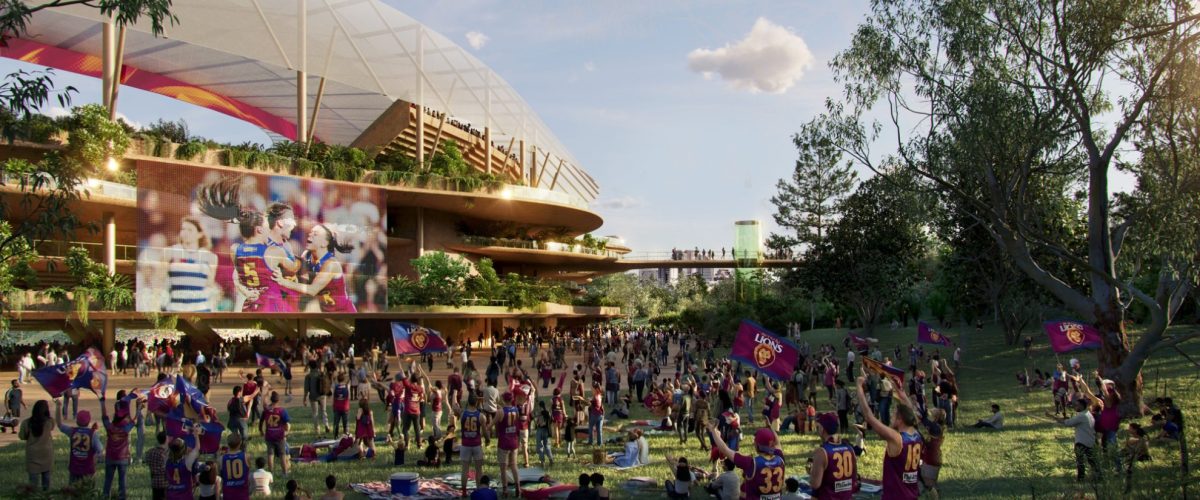
The Brisbane Stadium project forms a central component of Queensland’s preparations for the 2032 Olympic and Paralympic Games. Planned for Victoria Park in Herston, on Turrbal and Yagara Country, the new oval stadium is positioned as the city’s future primary venue for major sport and entertainment.
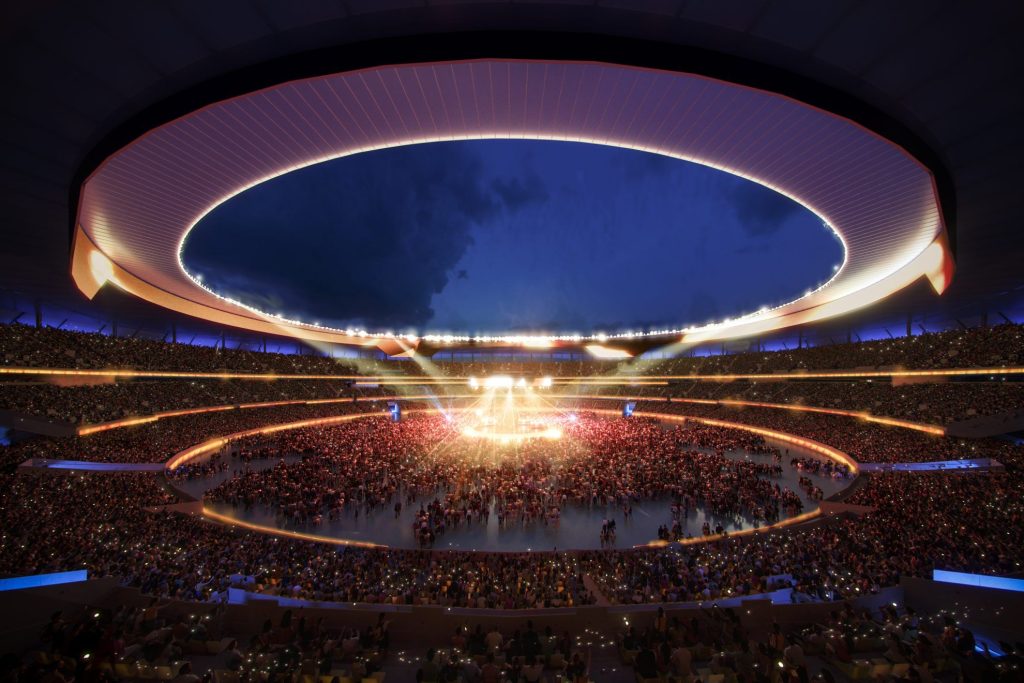
With a legacy seating capacity of 63,000 – expandable to 70,000 for concerts – the stadium is scheduled to host the Opening and Closing Ceremonies and athletics events during the 2032 Games before transitioning into long-term use as Brisbane’s main stadium.
The project is being delivered as part of the A$7.1bn ($5.01bn) Games Venues Infrastructure Program overseen by the Games Independent Infrastructure and Coordination Authority (GIICA), and jointly funded by the Australian and Queensland governments. Designed by COX Architecture and Hassell in partnership with Japan’s Azusa Sekkei, and supported by engineering firms Arup and schlaich bergermann partner, the stadium is currently in the planning, design and early works phases, with completion anticipated in 2031.
Embedded within the broader Victoria Park Precinct masterplan, the development integrates with the National Aquatic Centre and Athlete Village, forming a significant piece of generational civic infrastructure for Brisbane.
Architectural vision and design concept
The new Brisbane Stadium design draws inspiration from Queenslander homes, emphasising verandahs, passive cooling, shade, and connectivity to the surrounding landscape. COX Architecture and Hassell, both internationally recognised Australian firms, are leading the architectural effort alongside Japan’s Azusa Sekkei, which brings extensive stadium experience including the Japan National Stadium for the 2020 Olympic and Paralympic Games.
The design embeds the stadium into Victoria Park’s topography, preserving green space and leveraging sweeping views across the rolling hills. The stadium features multi-level pedestrian access via external bridges, reducing congestion and improving spectator flow.
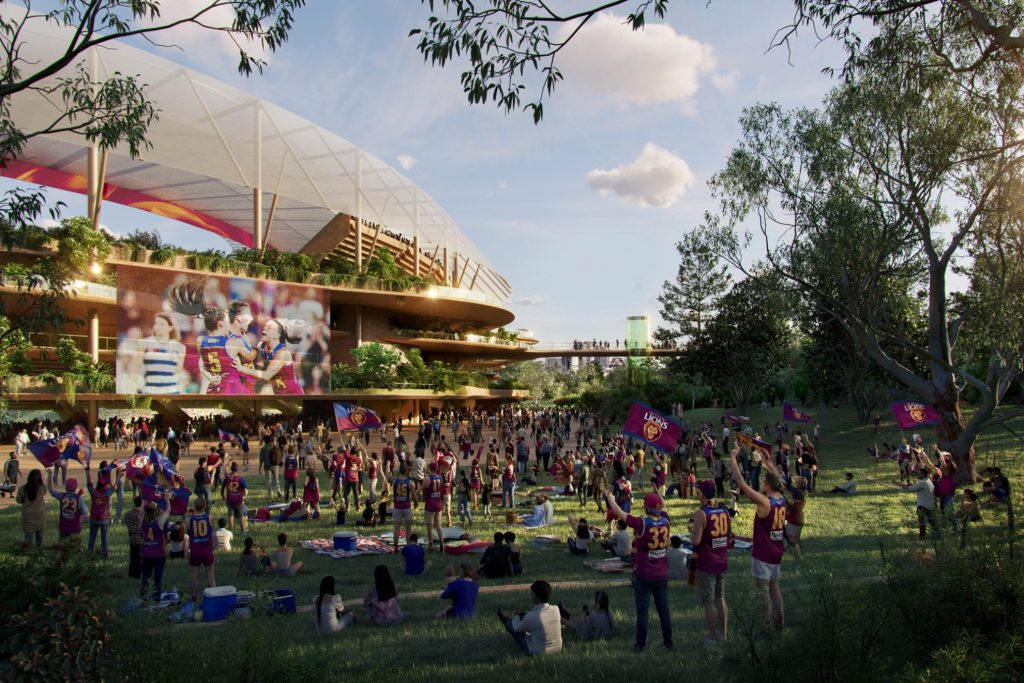
Its veranda-style roof, inspired by Queenslander architecture, allows for natural airflow and passive cooling, aligning with Brisbane’s subtropical climate. Open concourses and integrated vegetation reinforce the concept of a stadium within a park, while public spaces remain active beyond event days.
The stadium design prioritises operational efficiency, accessibility, and long-term community value, incorporating best practice Universal Design principles to ensure inclusivity for all users.
Capacity and legacy use
Brisbane Stadium is planned with a seating capacity of 63,000, expandable to 70,000 for concerts. During the 2032 Olympic and Paralympic Games, it will host the Opening and Closing Ceremonies and athletics events. Post-Games, the stadium will serve as Brisbane’s main stadium, becoming home to the Brisbane Lions (AFL), Queensland Bulls (first-class cricket), and Brisbane Heat (T20 cricket).
Additional athlete and Games-specific spaces, such as warm-up areas and cricket practice nets, will be repurposed into community-accessible facilities, ensuring the stadium continues to provide value beyond international events.
Engineering and structural features
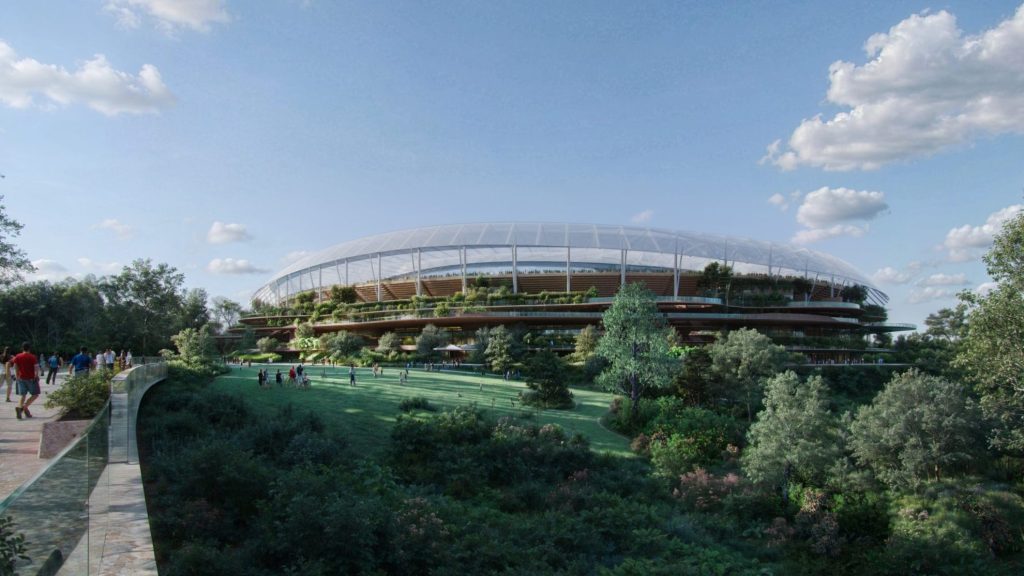
The stadium’s roof, a critical element of its Queenslander-inspired design, is being developed in collaboration with SBP and Arup, both global leaders in stadium engineering. The structural team focuses on delivering a climate-responsive, open yet shaded roof system capable of supporting large spectator volumes while remaining visually lightweight and aesthetically integrated with the park environment.
Early works and technical site investigations are underway to validate infrastructure and connectivity, with Arup leading broader precinct masterplanning, including public realm, transport integration, and green spaces.
Sustainability and climate-responsive design
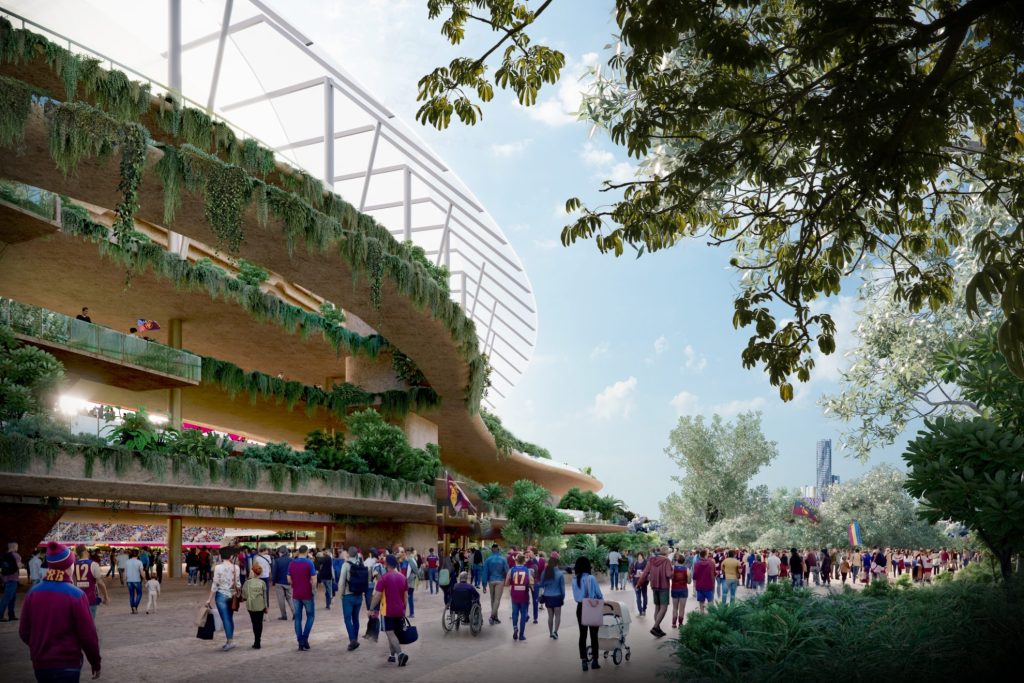
Brisbane Stadium emphasises environmentally responsive architecture. Key elements include:
- Passive airflow and ventilation through veranda-inspired roofing
- Shaded concourses to reduce heat load
- Integration with Victoria Park’s green spaces to minimise visual and environmental impact
- Universal Design principles to ensure accessibility for all spectators and athletes
These measures are designed to create a stadium that is operationally efficient, environmentally responsible, and culturally reflective of Brisbane and Queensland.
Victoria Park Precinct masterplan
The Brisbane Stadium is part of the larger Victoria Park Precinct, which includes the National Aquatic Centre and Brisbane Athletes Village. Arup has been appointed to deliver the integrated masterplan, aimed at creating a vibrant, multi-use precinct for sport, recreation, and community life.
The precinct is intended to accommodate over 10,000 athletes and officials during the Olympic Games and more than 5,000 during the Paralympic Games.
Contractors and key players involved in the Brisbane Stadium project
GIICA has appointed Unite32, a tier-one consortium led by Laing O’Rourke and AECOM, as Delivery Partner for the Games Venues Infrastructure Program. Unite32 brings international Games delivery expertise, including London 2012, Rio 2016, Paris 2024, and LA 2028, combined with local Queensland experience.
Their responsibilities include:
- Managing the design and construction of 17 new and upgraded venues
- Integrating international expertise with local knowledge and operational planning
- Ensuring on-time, on-budget delivery with legacy benefits for the Queensland community
Unite32’s programme management aims to coordinate multi-disciplinary teams, ensuring cohesion between architects, engineers, and contractors.
Strategic importance and legacy planning
The stadium and precinct are designed not only for the 2032 Olympic and Paralympic Games but also to serve as a generational infrastructure investment. Planned legacy uses include:
- Hosting AFL, cricket, and major concerts
- Providing community-accessible sport and recreation spaces
- Maintaining year-round activation of public spaces within Victoria Park
- Enhancing Brisbane’s global profile as a city capable of delivering world-class sporting and entertainment events
Place-led design principles, transport integration, and early-stage operational planning have been central to ensuring the precinct will function efficiently during and beyond the Games.
Project timeline and anticipated completion
The stadium is currently in the planning, design, and early works phases, with final construction anticipated to be completed by 2031, one year before the 2032 Olympic and Paralympic Games. Early design work, technical investigations, and community consultation are ongoing to confirm the stadium footprint, precinct integration, and public realm enhancements.