Robotic construction systems are being deployed at the Qianhai Museum project in Shenzhen, China, offering a practical example of how automation is being integrated into active construction sites rather than limited to pilot or demonstration use.
The Qianhai Museum, developed by China State Construction Engineering Corporation (CSCEC), is located within the Qianhai Cultural Arts Peninsula and comprises approximately 32,400m2 (348,750ft2), with a total gross floor area of around 126,000m2 (1.35 million ft2). While the building will serve as a public cultural institution, its construction phase has incorporated multiple robotic systems across core work packages.

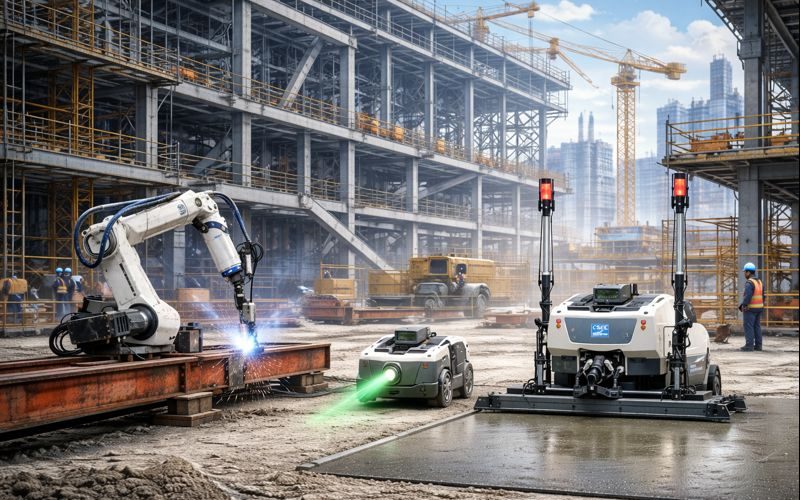
Robots have been introduced in welding operations, where rail-mounted and collaborative units use drag-and-teach programming to replicate precise weld paths across repeated components. According to data released by CSCEC, first-pass welding acceptance rates exceed 99%, reducing inspection cycles and rework.
Surface treatment processes have also been automated. Portable laser rust-removal and wall-polishing robots are being used on site, delivering more than twice the efficiency of manual methods. In parallel, concrete levelling robots are deployed to control slab flatness within ±5 millimetres, achieving qualification rates above 95% while reducing the size of finishing crews. Dust-collection systems are integrated into these workflows to limit worker exposure during high-particulate activities.
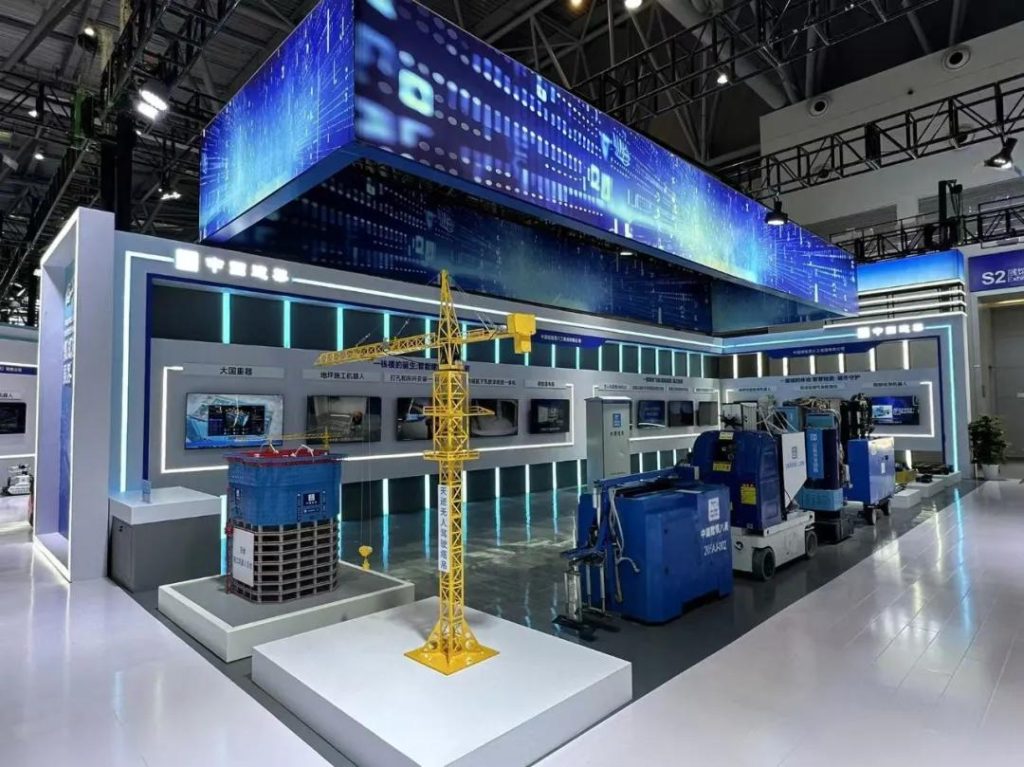
The categories of robots deployed on site closely align with systems CSCEC has previously showcased at industry exhibitions as part of a “full robotic construction system.” Those demonstrations focused on robotic welding, laser-based surface treatment, and automated concrete operations — technologies now applied under live construction conditions at the Qianhai Museum site rather than in controlled environments.
At Qianhai Museum, robots are assigned to repetitive, tolerance-sensitive tasks, with on-site teams retaining responsibility for programming, supervision, and quality verification. The project illustrates how large contractors are beginning to operationalise construction robotics within standard site workflows, particularly in areas where consistency, precision, and safety are difficult to achieve through manual processes alone.