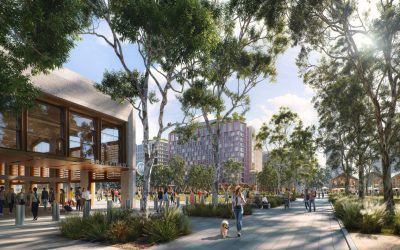
The refurbishment of mid- to late-20th century office buildings is increasingly shaping London’s commercial real estate landscape. Chapman Taylor’s interior design concept for St George’s House West in Wimbledon exemplifies how adaptive reuse can reconcile architectural heritage, sustainability, and modern workplace requirements.
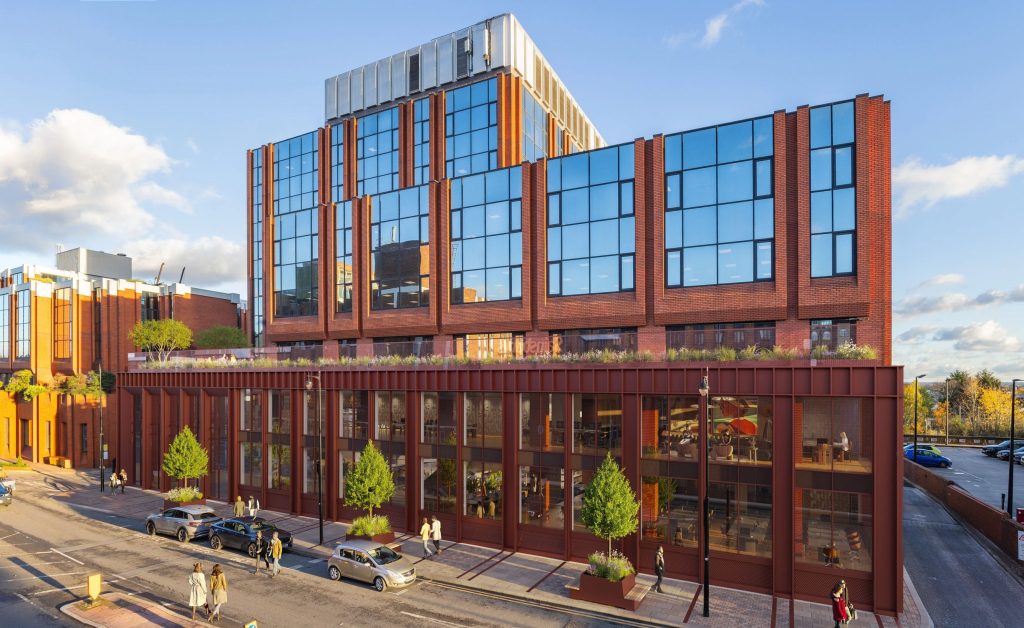
Located in the heart of Wimbledon town centre, the 1980s office building had historically suffered from constrained floorplates and a heavy masonry podium that limited daylight and visual connection with the street. Chapman Taylor’s approach retains the structural core and existing brickwork, creating a “legible stitch” between old and new.
Flexible workspaces and spatial hierarchy
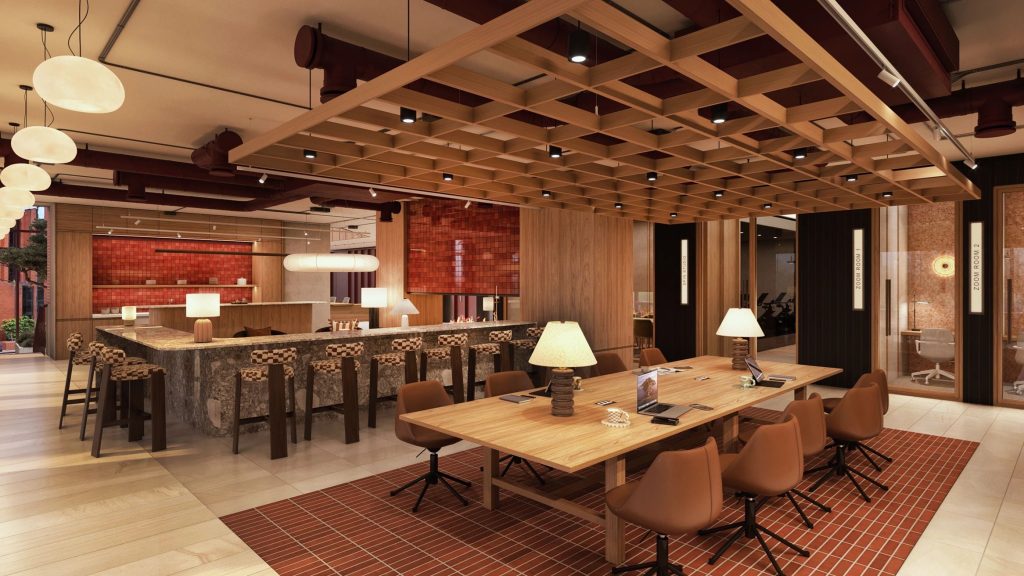
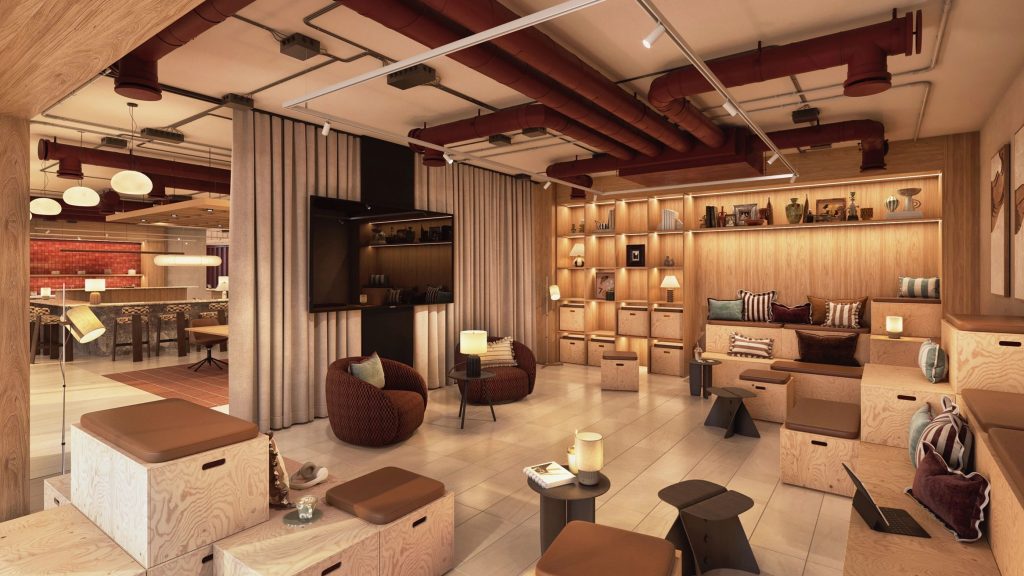
The interior design strategy emphasises flexible spatial hierarchies. Informal lounges transition to focused work zones, enclosed meeting rooms, and semi-enclosed presentation spaces, giving occupants autonomy over how, when, and where they collaborate. This layered approach to workspace planning reflects a broader trend in London offices where flexibility is central to attracting and retaining tenants.
Integrating wellbeing into workplace design
Wellbeing is integrated throughout the scheme. A dedicated spin studio and high-quality end-of-trip facilities reflect a growing trend in workplace design, where amenities are no longer peripheral but central to daily routines. Such interventions support active travel, occupant health, and daily workplace satisfaction, while also reinforcing the building’s sustainability credentials.
Sustainability-led refurbishment and low-carbon strategies

The project adopts a sustainability-first methodology, retaining the building’s structural elements to reduce embodied carbon, and introducing low-energy mechanical systems, solar PV panels, and locally sourced high-performance materials. Street-level greening and improved daylight penetration further enhance environmental performance, illustrating how retrofit projects can elevate both user experience and urban quality.
Implications for London’s commercial office market
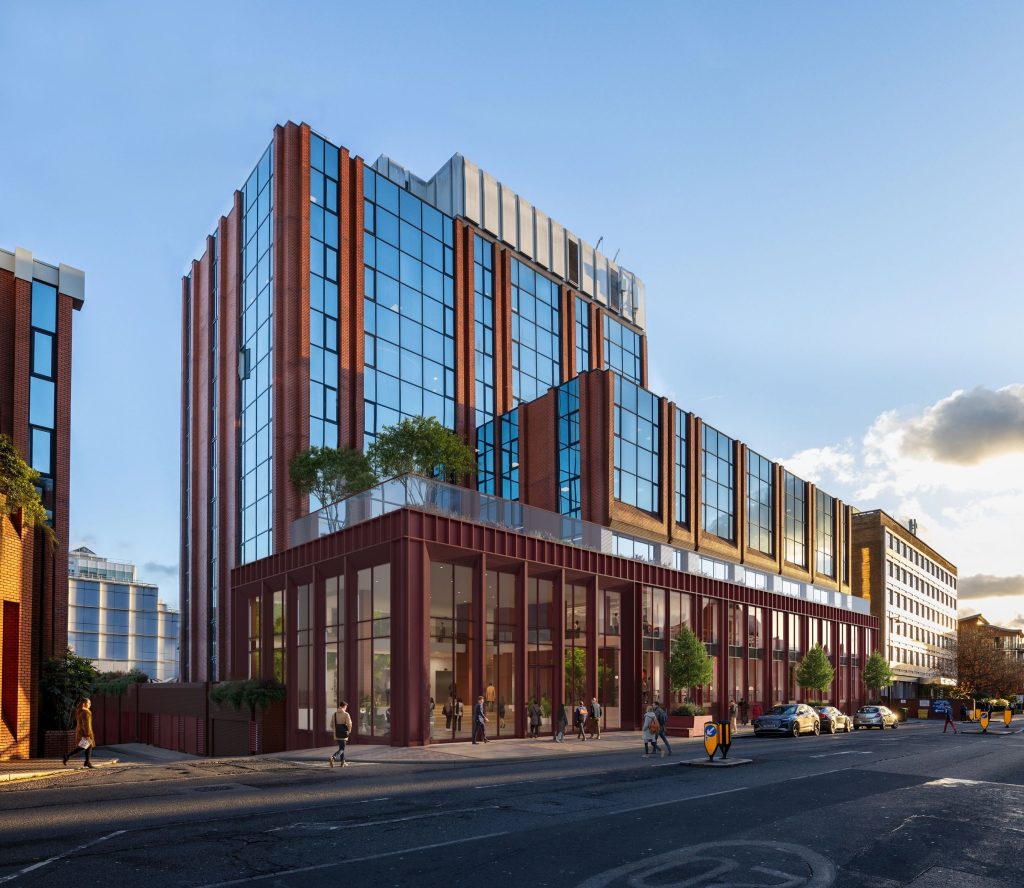
The planning submission for the refurbishment was made in August 2025 and approval was received in October. St George’s House West is indicative of a larger pattern in London’s commercial sector, where developers and design teams are increasingly prioritising the revitalisation of underperforming office assets over new-build schemes. Recent projects reflect a shift towards sustainability-led upgrades that merge heritage retention with modern operational standards, with Chapman Taylor’s work providing a benchmark for future Grade A office refurbishments.