Danish architecture firm Henning Larsen, a part of the Ramboll Group, has won the design competition for the new Hånes School and district building in Kristiansand, Norway. The project, designed in collaboration with Ramboll and set on the east side of Toppdalsfjorden, places nature at the center of learning, play, and community life, integrating the site’s sloping terrain, rich landscape, and existing forest into the everyday school experience.
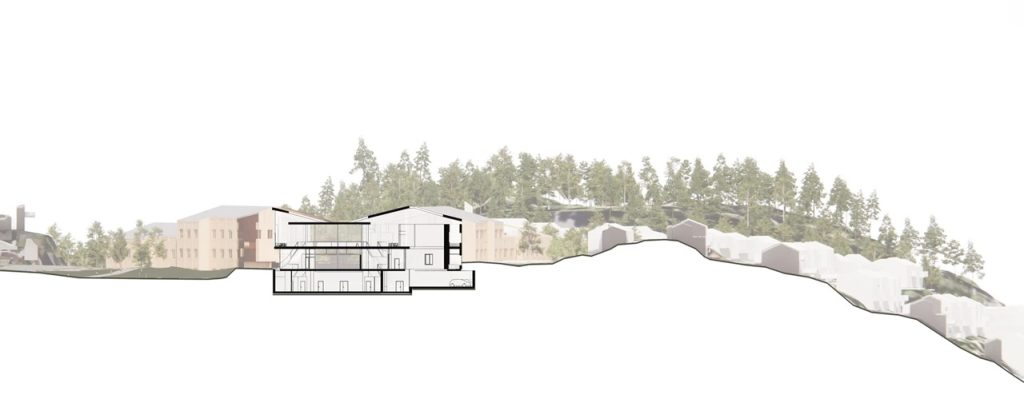
Integrating forest and education
The new primary school, which will accommodate around 600 students and is expected to be completed by the end of 2029, builds on Henning Larsen’s ongoing work with local schools in Kristiansand. The design uses the forest as an active learning and recreational space, making paths, playgrounds, and information points about local flora and fauna part of the daily school experience.
Rainwater from the school roof will be channelled into canals and small pools within the play landscape, creating interactive opportunities for students to engage with natural processes, from water flow to ecological cycles.
A Y-shaped design with a social heart
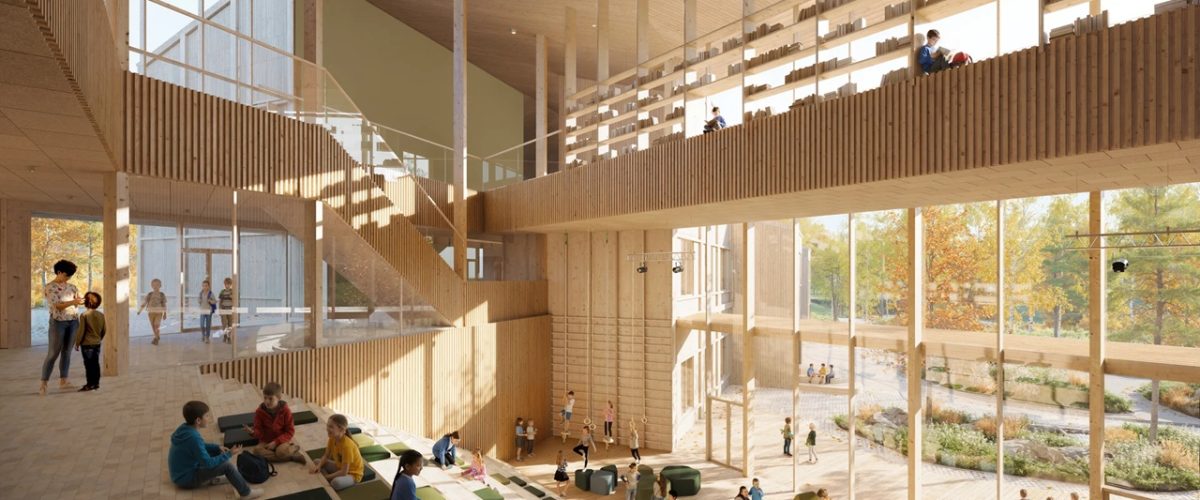
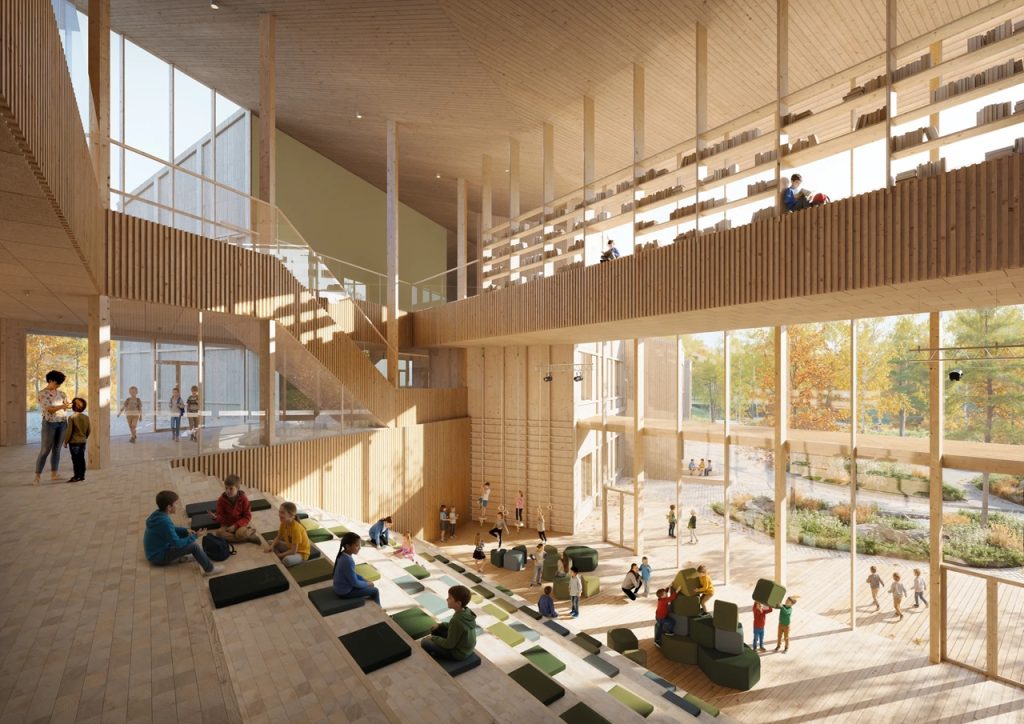
The school is structured as a Y-shaped building, organised around a central social heart that houses a shared gathering space, amphitheatre, and library. The design intentionally orients the building toward the forest, drawing the surrounding greenery into the heart of the school and ensuring visual connections to nature from multiple points within the building.
Karoline Igland, Director, Norway, explains: “The project brings the forest into the heart of the building, opening toward an amphitheatre and ensuring that greenery is visible from all sides. The school is designed as both a place of learning and a local meeting point, with a strong connection between landscape, play, and education.”
Connecting landscape, play, and community
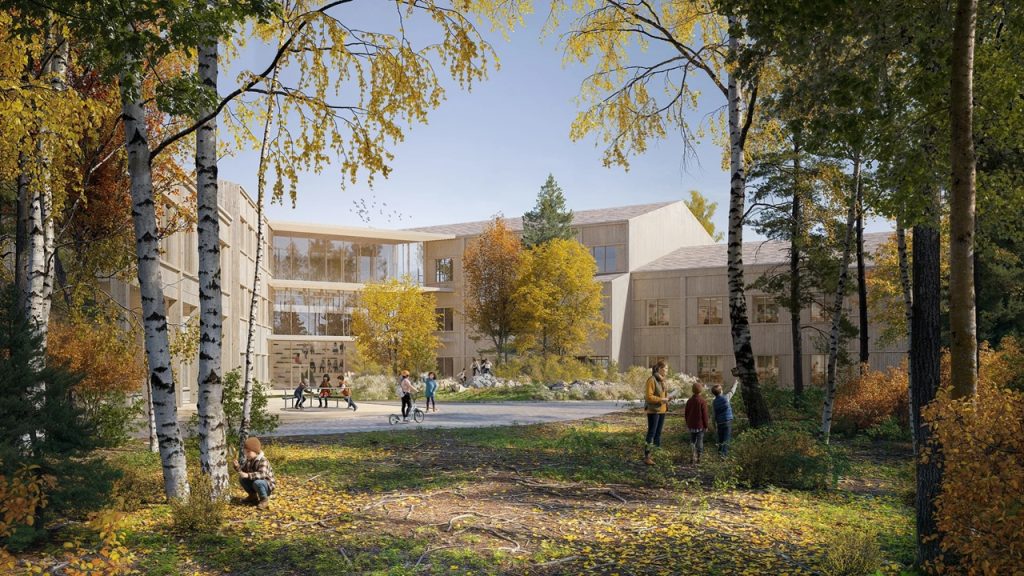
The old forest south of the school will serve as both playground and learning area, supporting movement, collaboration, and discovery. The design strategy emphasises minimal intervention in the terrain, letting the natural contours guide paths and outdoor learning areas. By combining educational spaces with natural and social environments, the school is envisioned as a community hub for both students and local residents.