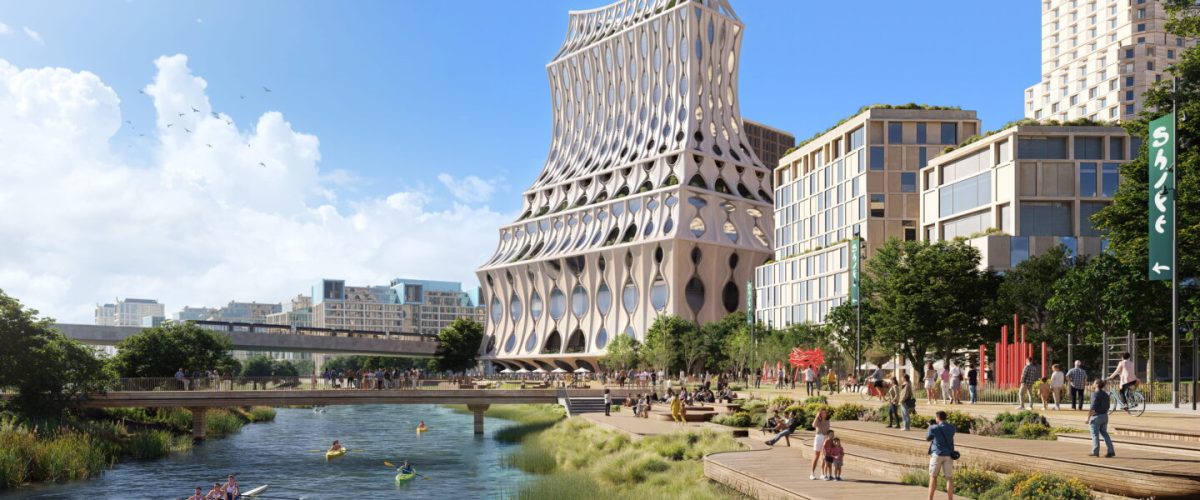
For a new waterfront district in Rotterdam, Heatherwick Studio has imagined a landmark that grows less like a building and more like an ecosystem.
Named ‘Urban Reef’, the proposal draws inspiration from coral reefs: layered environments that support life, adapt over time and reveal their complexity gradually. Conceived for the Shift Landmark competition organised by Shift, the project explores how architecture might communicate the urgency and possibility of climate action through space, landscape and experience.
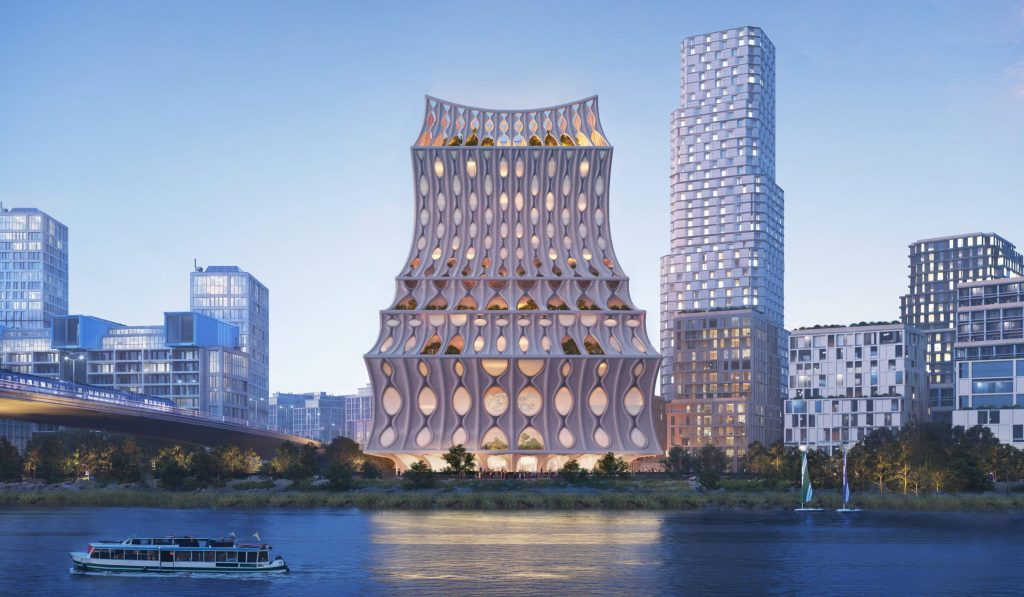
Heatherwick’s concept is one of five shortlisted proposals for the initiative, planned for Waterkant, a new waterfront district in the south of Rotterdam that aims to become one of Europe’s most forward-looking urban neighbourhoods.
The studio describes the project as an experience rather than a conventional building. The design unfolds as a sequence of spaces that guide visitors through the intertwined stories of nature, climate and human responsibility. Through immersive and multisensory environments, the architecture invites exploration, presenting the beauty and vulnerability of the natural world in ways that are accessible and engaging — addressing the climate challenge without fear or blame.
A spatial journey through climate stories
The proposal treats architecture as a journey rather than a destination. Visitors enter through grounded, textured spaces where immersive exhibitions introduce the fragility and wonder of natural ecosystems. Sound, light and material work together to create an atmosphere that is contemplative rather than didactic.
Like a reef forming layer by layer, the building gradually unfolds the story of climate action from the ground up. As the path rises through the structure, the spaces open outward and the narrative shifts from ecological vulnerability to the ingenuity of human responses. Stories and practical ideas from around the world highlight how constructive change is already taking place.
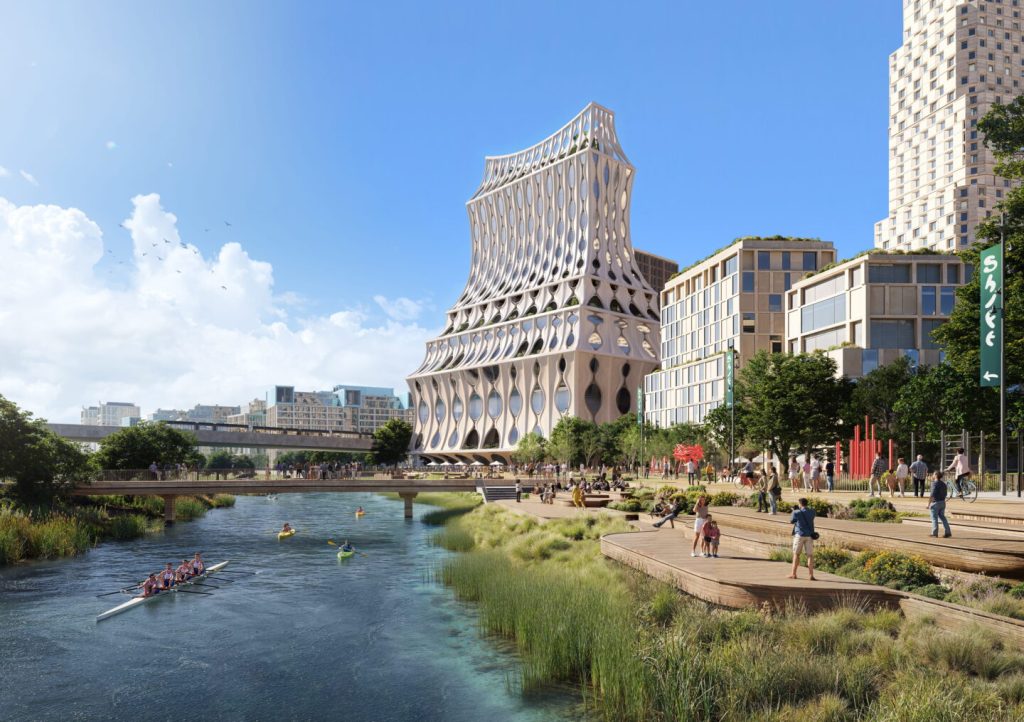
At the upper levels, a bright and expansive space celebrates these possibilities, offering visitors practical insights into how change can happen — from technological innovation to everyday actions. Before leaving, visitors are invited to reflect on their own environmental footprint through simple tools, including personal carbon-footprint scanning, designed to build awareness without judgement.
Built like a living structure
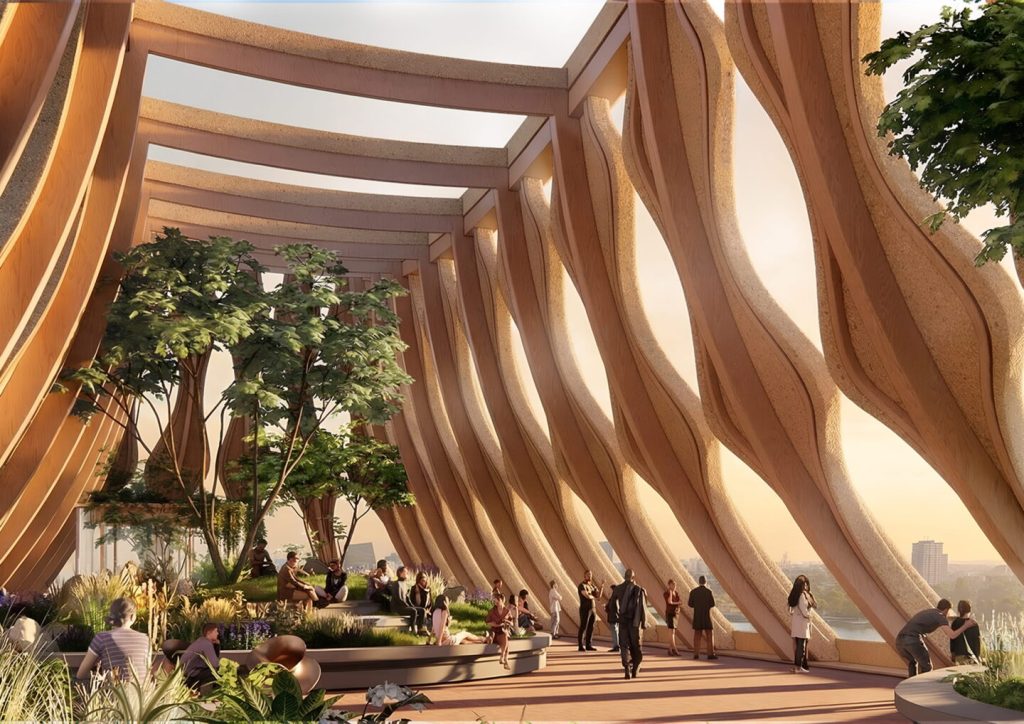
The architecture of ‘Urban Reef’ draws directly from the logic of natural reef systems — structures that grow, adapt and support diverse forms of life. Rather than a static monument, the proposal imagines a building capable of evolving alongside the knowledge and stories it contains.
The structure is envisioned primarily in timber, paired with modular components that allow the interior spaces to be reconfigured as climate science and exhibition content develop over time. The external skin and interior finishes draw on biobased and recyclable materials, helping to minimise embodied carbon while giving the architecture a tactile, natural character.
Landscape as an extension of the architecture
The surrounding landscape forms an integral part of the project. A sequence of planted terraces and outdoor rooms extends the visitor journey beyond the building itself, supporting biodiversity while offering places for reflection and pause.
Environmental strategies are embedded into the architecture, with natural ventilation, daylit interiors and integrated water-management systems shaping a building that is both environmentally responsive and welcoming to the public.
The winning design for the Shift Landmark is expected to be announced in spring, after which the selected team will begin a participatory process with local communities. If realised, ‘Urban Reef’ proposes a new kind of civic landmark — one that replaces spectacle with discovery, inviting visitors to explore how architecture might help imagine a more regenerative relationship between cities and the natural world.